
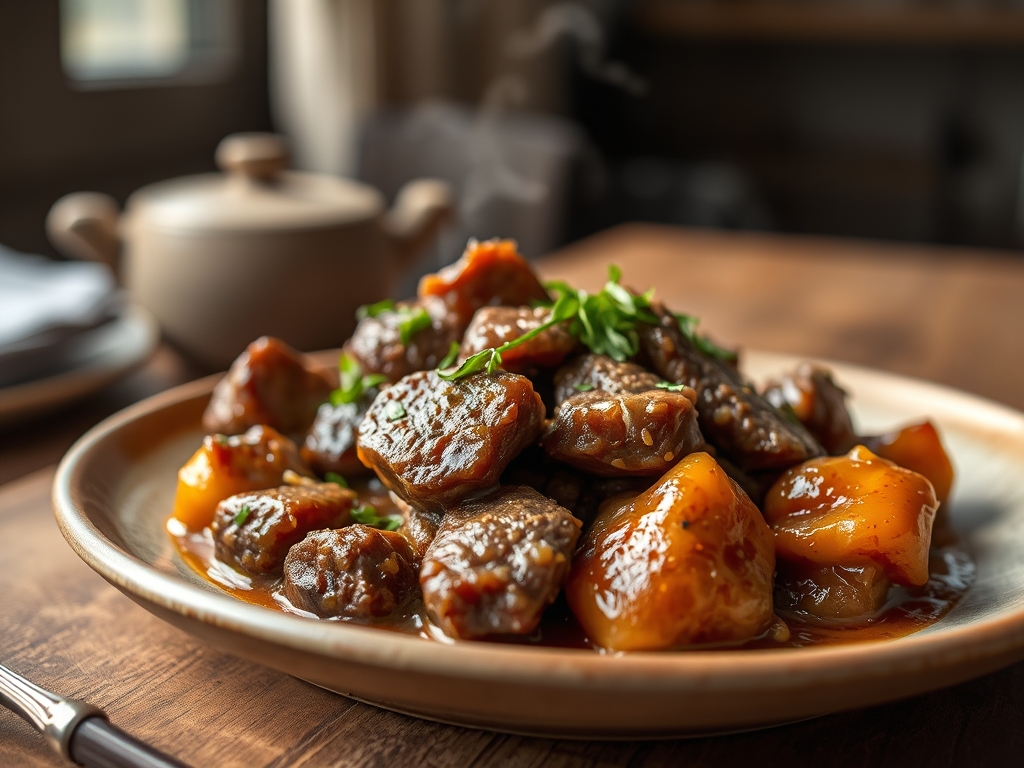
Imagine the scent of slow-simmered rosemary and caramelized onions drifting through your hallway on a rainy Tuesday. There is something deeply primal about a rich, dark gravy clinging to fork-tender meat. When you master boneless stew beef recipes, you are not just making dinner; you are performing a complex series of chemical transformations that turn tough muscle fibers into velvet.
The secret to that "melt-in-your-mouth" texture is not luck. It is the calculated breakdown of collagen into gelatin. Most home cooks rush the process, resulting in gray, rubbery cubes that require a steak knife to navigate. We are going to change that today. We will focus on the interplay of heat, acidity, and time to ensure your kitchen smells like a five-star French bistro. Grab your favorite apron and a glass of red wine; we are diving into the molecular magic of the ultimate comfort food.
The Gathers:
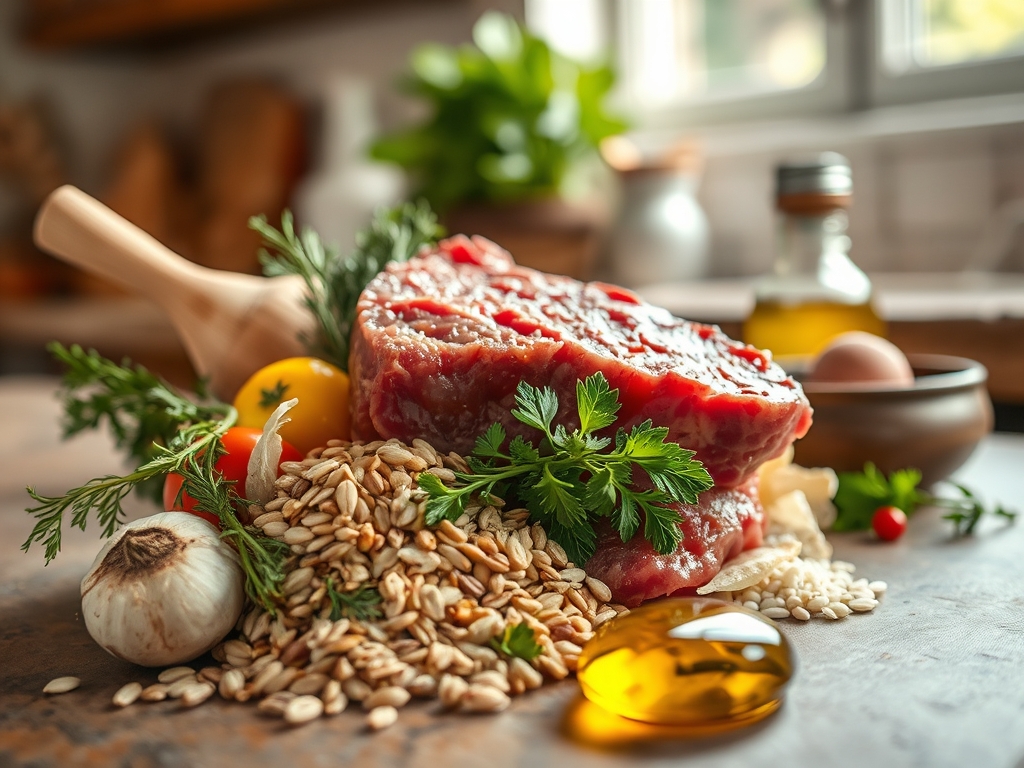
Before we light the burner, we must assemble our mise-en-place with precision. Use a digital scale to ensure your ratios are exact. For the protein, look for boneless chuck roast. This specific cut contains the highest concentration of intramuscular fat and connective tissue, which is vital for a viscous mouthfeel.
The Essentials:
- 3 lbs Boneless Beef Chuck (cubed into 1.5-inch pieces).
- 40g All-purpose flour (for the initial dredge).
- 200ml Dry Red Wine (Cabernet or Merlot for a piquant finish).
- 500ml Bone Broth (high gelatin content is non-negotiable).
- Aromatics: Pearl onions, heirloom carrots, and celery stalks.
- Herbs: Fresh thyme, bay leaves, and a sprig of rosemary.
- Fat: Unsalted European-style butter and high-smoke-point avocado oil.
Smart Substitutions:
If you are avoiding alcohol, swap the wine for a mixture of beef stock and two tablespoons of balsamic vinegar to provide the necessary acidity. For a deeper umami profile, add a tablespoon of white miso paste or a splash of Worcestershire sauce. If you lack a saucier, a heavy-bottomed Dutch oven is your best friend for heat retention.
The Clock
Efficiency in the kitchen is about "Chef's Flow." This means performing tasks in an order that maximizes flavor while minimizing downtime.
- Prep Time: 25 minutes. This includes cubing the beef, peeling the aromatics with a Y-peeler, and measuring liquids.
- Active Sear: 15 minutes. Do not rush this; the Maillard reaction requires direct, high-heat contact.
- The Simmer: 2.5 to 3 hours. This is the "hands-off" phase where the magic happens.
- The Rest: 10 minutes. Crucial for moisture redistribution.
Total time is roughly 3.5 hours. While the stew simmers, you are free to aerate a bottle of wine or prep a side of garlic mashed potatoes.
The Masterclass
1. The Strategic Sear
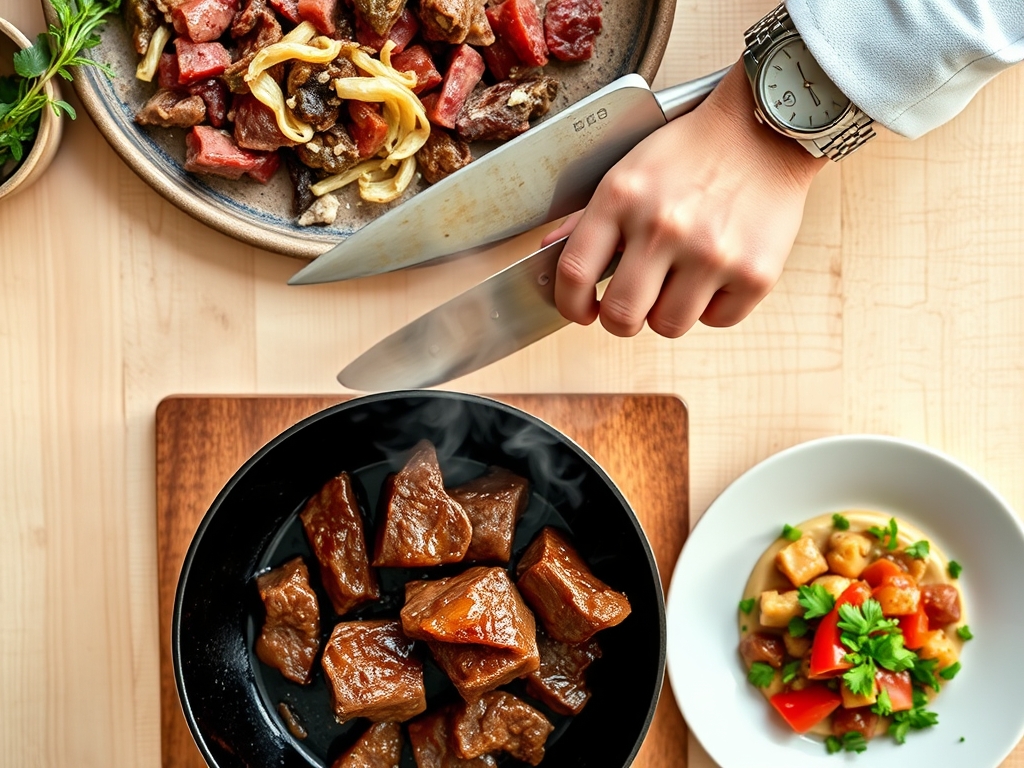
Pat your beef dry with paper towels until bone-dry. Dust lightly with flour, salt, and pepper. Heat your heavy-bottomed skillet until the oil shimmers. Sear the beef in batches, ensuring pieces do not touch.
Pro Tip: This is the Maillard reaction. When proteins and sugars are heated above 285 degrees Fahrenheit, they create hundreds of new flavor compounds. Overcrowding the pan causes the temperature to drop, leading to steaming instead of browning.
2. Deglazing the Fond
Once the meat is removed, you will see brown bits stuck to the pan. This is "fond." Pour in your red wine and use a wooden spatula to scrape every bit of that concentrated flavor back into the liquid.
Pro Tip: Deglazing uses the solvent properties of alcohol and water to lift caramelized proteins. These bits contain the highest concentration of savory "umami" in the entire dish.
3. Sweating the Aromatics
Add your carrots, onions, and celery to the pan with a knob of butter. Use a microplane to grate in fresh garlic at the very last second to prevent burning.
Pro Tip: Sweating vegetables at a lower temperature softens the cellulose walls without browning them. This allows the vegetables to infuse the fat with their essential oils.
4. The Low and Slow Braise
Return the beef to the pot and add your bone broth until the meat is three-quarters submerged. Add your herb bundle. Bring to a bare simmer, then cover and move to a 300-degree Fahrenheit oven.
Pro Tip: Thermal carryover and gentle heat are key. In an oven, the heat surrounds the pot evenly, preventing the bottom from scorching, which often happens on a stovetop.
5. The Emulsification Finish
Once the meat is tender, remove the lid. If the sauce is too thin, whisk in a "beurre manie" (equal parts softened butter and flour).
Pro Tip: This creates a stable emulsification. The flour particles coat the fat droplets, preventing them from pooling on the surface and creating a glossy, velvet-like texture.
6. The Brightness Adjustment
Before serving, taste for balance. Add a squeeze of lemon juice or a teaspoon of apple cider vinegar.
Pro Tip: Acidity acts as a "flavor highlighter." It cuts through the heavy fats and clarifies the individual notes of the beef and herbs, making the dish taste "lighter" despite its richness.
The Deep Dive
Macro Nutrition:
A standard serving of this beef stew provides approximately 35g of protein, 18g of fat, and 12g of carbohydrates. It is a powerhouse of iron and zinc, essential for metabolic health.
Dietary Swaps:
- Keto: Replace the flour dredge with xanthan gum (use sparingly) and swap carrots for radishes, which lose their peppery bite and mimic potatoes when stewed.
- Vegan: Use "beefless" tips or king oyster mushrooms. Replace bone broth with a dark mushroom dashi for that savory depth.
- Gluten-Free: Use cornstarch or arrowroot powder as a thickener instead of all-purpose flour.
The Fix-It:
- Tough Meat: If it is still chewy, it simply hasn't cooked long enough. Put it back in. Collagen takes time to melt.
- Salty Overload: Drop in a peeled, halved potato. It acts as a sponge for excess salt. Alternatively, add a pinch of sugar to balance the palate.
- Greasy Surface: Use a wide spoon to skim the "fat cap" or chill the stew overnight; the fat will solidify on top for easy removal.
Meal Prep Science:
Stew is famously better on day two. This is because the aromatics continue to infuse the liquid even after cooling. When reheating, use a low flame and add a splash of water to loosen the gelatin, ensuring "day-one" quality without overcooking the meat.
The Wrap-Up
Mastering boneless stew beef recipes is a rite of passage for any serious home cook. By focusing on the Maillard reaction, proper deglazing, and the patient breakdown of collagen, you have elevated a humble peasant dish into a masterpiece of molecular gastronomy. Remember, the best tool in your kitchen isn't your tongs or your bench scraper; it is your patience. Now, go serve up a bowl of liquid gold and bask in the glory of a perfectly executed braise.
The Kitchen Table
Why is my stew meat still tough after two hours?
Beef chuck contains heavy connective tissue. If it is tough, the collagen hasn't fully converted to gelatin. Continue simmering at a low temperature; some cuts require up to three hours to reach peak tenderness.
Can I make this in a slow cooker?
Yes, but you must sear the meat in a heavy-bottomed skillet first. Slow cookers do not reach temperatures high enough for the Maillard reaction, so skipping the sear results in a bland, gray stew.
What is the best wine for beef stew?
Choose a dry, medium-bodied red like Merlot or Pinot Noir. Avoid "cooking wines" which contain excess salt. A wine you enjoy drinking will always yield the best flavor profile for your sauce.
How do I get a thick, glossy gravy?
Use a "beurre manie" (butter and flour paste) at the end. The fat in the butter prevents the flour from clumping, while the starch granules swell to create a smooth, light-reflecting viscous texture.