
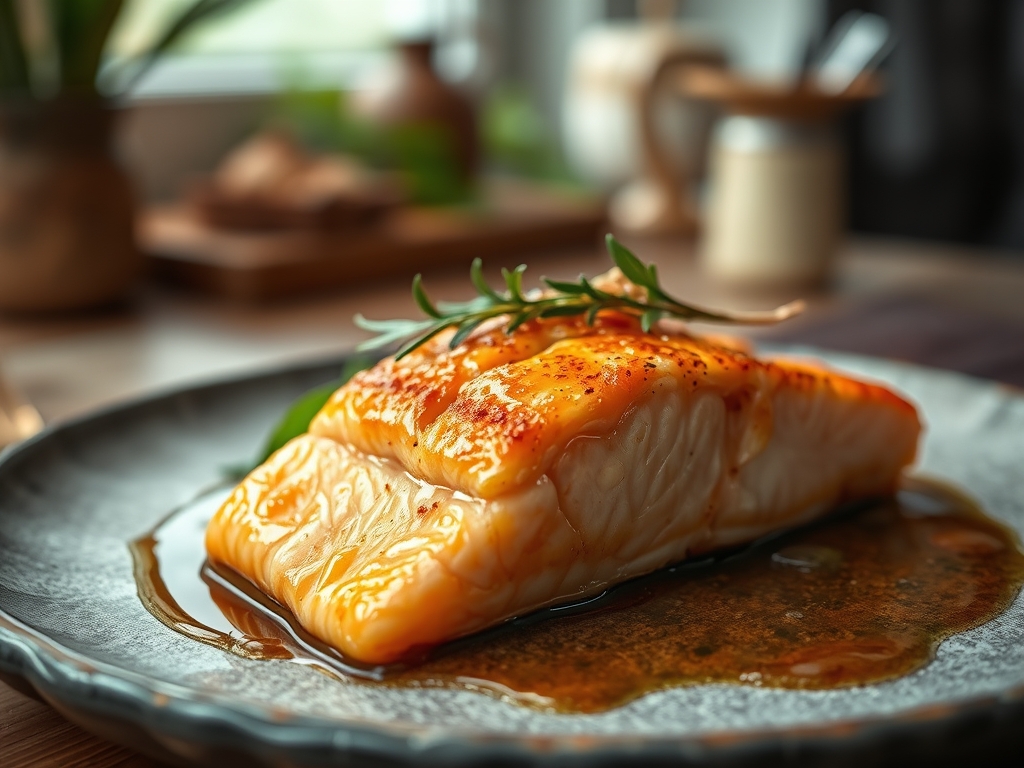
Imagine the sizzle of a heavy bottomed skillet meeting cold, ruby-red flesh. The air fills with a piquant mix of lemon zest and sea salt while the skin transforms into a glass-like crackle. Finding the best wild salmon recipes is about more than just dinner; it is about mastering the delicate balance between high-heat searing and internal moisture retention.
We are diving deep into the molecular magic of Sockeye and King salmon tonight. Unlike their farmed cousins, wild varieties are leaner and packed with astaxanthin, the potent antioxidant that gives them that vibrant hue. Because they are more muscular, they require a different technical approach to avoid the dreaded chalky texture of overcooked protein. We are going to treat these fillets like the luxury ingredients they are, using science to unlock a buttery mouthfeel that feels indulgent but remains incredibly nutrient dense. Grab your favorite apron and a glass of something crisp. We are about to turn your kitchen into a high-end bistro where the focus is on performance, flavor, and the perfect Maillard reaction.
The Gathers:
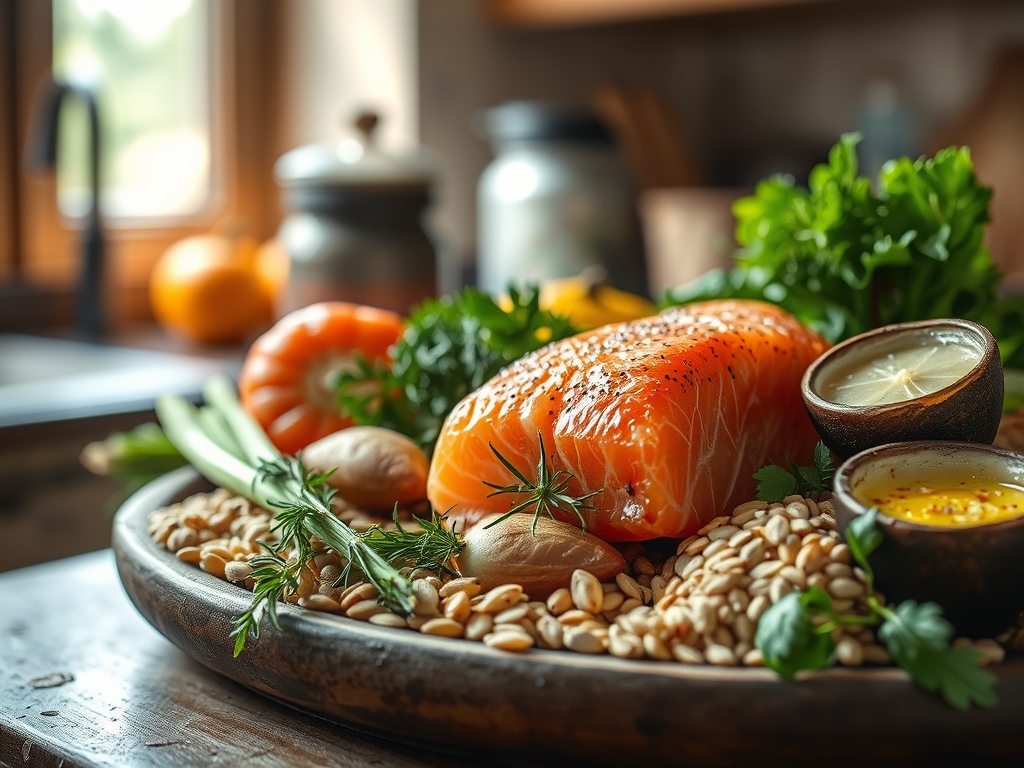
To execute these hacks, your mise-en-place must be precise. Start with center-cut wild salmon fillets; these offer the most uniform thickness for even thermal distribution. You will need a high-smoke-point fat like avocado oil or clarified butter to ensure you can reach searing temperatures without the oil breaking down into acrid compounds.
Your aromatics are equally vital. Gather fresh dill, garlic cloves, and a bright citrus component. Use a microplane to zest your lemons; this tool allows you to harvest the oil-rich flavedo without hitting the bitter white pith. For the seasoning, reach for flaky sea salt and freshly cracked peppercorns. If you want to elevate the umami profile, keep a small jar of white miso or nutritional yeast nearby to create a viscous glaze that clings to the fibers.
Smart Substitutions: If you are out of fresh herbs, a high-quality dried tarragon works well, though you should crush it between your palms to release the volatile oils. For those avoiding dairy, replace butter with a cold-pressed extra virgin olive oil added at the very end to preserve its polyphenols. If you lack a heavy skillet, a stainless steel pan will work, provided you allow the protein to naturally release from the surface before attempting to flip it with your tongs.
The Clock:
Efficiency in the kitchen is all about the Chef's Flow. This is the art of overlapping tasks so that no heat is wasted. Your total active prep time is approximately 15 minutes, with a cooking window of 8 to 12 minutes depending on the thickness of your fillets.
Start by pulling your salmon from the refrigerator 20 minutes before cooking. This "tempering" phase is non-negotiable; it prevents the exterior from burning while the interior remains dangerously raw. While the fish reaches room temperature, use your bench scraper to clear your workstation and prep your garnishes. The goal is to have the table set and the sides ready before the salmon ever hits the pan. Because wild salmon is lean, the window between "perfectly translucent" and "dry" is less than sixty seconds. By syncing your workflow, you ensure the fish is served the moment it hits its peak internal temperature.
The Masterclass:
1. The Desiccation Ritual
Use a paper towel to pat the skin bone-dry until it feels like parchment. Moisture is the enemy of a crisp sear because it creates a buffer of steam.
Pro Tip: This process prevents the Leidenfrost effect, where a layer of vapor keeps the fish from making direct contact with the hot metal, ensuring a faster and more even Maillard reaction.
2. The Cold Start Hybrid
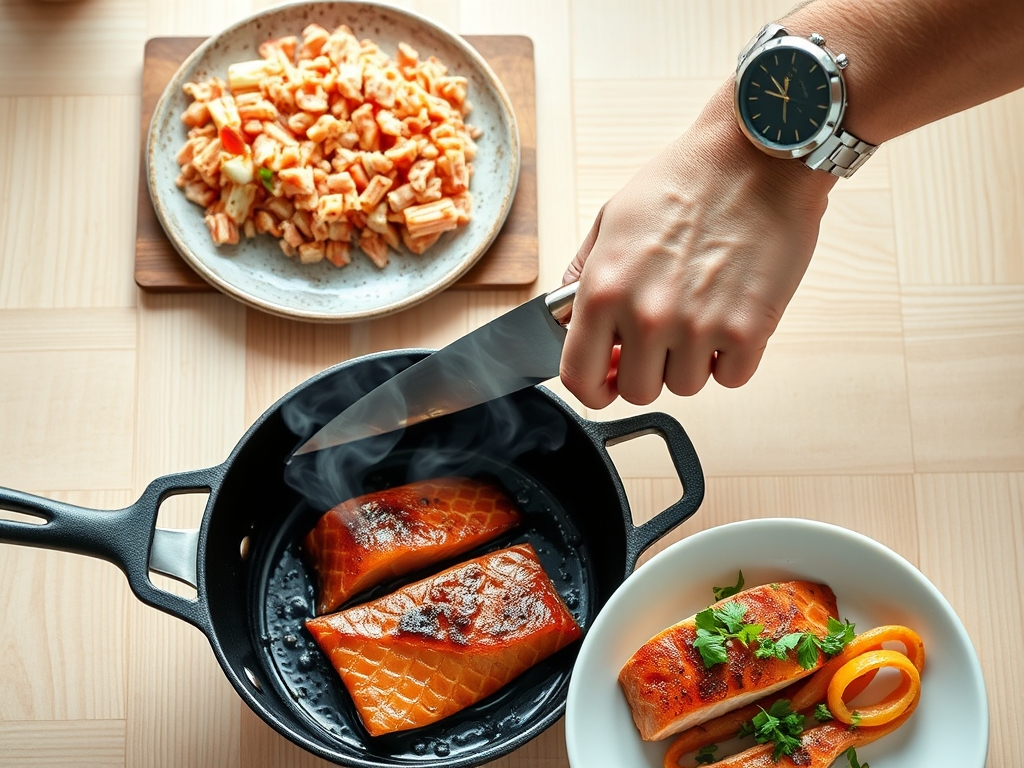
Place the salmon skin-side down in a cold, heavy-bottomed skillet before turning the heat to medium-high. This allows the fat beneath the skin to render slowly as the pan heats up.
Pro Tip: Gradual heating prevents the muscle fibers from contracting too violently, which stops the "white stuff" (albumin) from being squeezed out to the surface.
3. The Weighted Press
Once the sizzle begins, use a flexible fish spatula or a small weighted press to hold the fillet down for the first 60 seconds.
Pro Tip: Fish skin tends to curl when heat hits the collagen; pressing it flat ensures 100 percent surface contact for a uniform, glass-like crunch.
4. The Aromatics Infusion
When the salmon is 70 percent cooked through from the bottom up, toss in crushed garlic and thyme. Tilt the pan and use a spoon to infuse the hot oil over the flesh.
Pro Tip: This is known as arrosé; the hot fat gently cooks the top of the fish without the need for a harsh flip that might break the delicate flakes.
5. The Acid Deglaze
Just before pulling the pan from the heat, squeeze fresh lemon juice directly into the hot oil. Use the liquid to deglaze the browned bits from the bottom of the pan.
Pro Tip: The acid cuts through the fatty acids of the fish, creating a bright, emulsified pan sauce that balances the richness of the omega-3s.
6. The Thermal Carryover Rest
Remove the salmon when a digital scale or thermometer reads 120 degrees Fahrenheit for medium-rare. Transfer it to a warm plate, not a cold one.
Pro Tip: Thermal carryover will continue to raise the internal temperature by 5 to 10 degrees after the fish is removed from the heat, preventing overcooking.
7. The Aerated Finish
Whisk a teaspoon of cold butter or olive oil into the remaining pan juices until it becomes viscous and glossy, then pour it over the rested fillet.
Pro Tip: Emulsifying cold fat into a hot liquid creates a stable sauce that coats the palate more effectively than plain oil.
The Deep Dive:
Wild salmon is a nutritional powerhouse, offering roughly 25 grams of protein per 4-ounce serving. It is exceptionally high in Vitamin B12 and Selenium, which are crucial for cognitive function and metabolic health. For those on a Keto diet, this recipe is a goldmine of healthy fats. Gluten-free diners are naturally safe here, while Vegan friends can apply these same searing techniques to thick slabs of King Oyster mushrooms or "salmon" made from marinated carrots.
The Fix-It:
- Skin sticking? You likely tried to flip it too early. Protein bonds release naturally once they are sufficiently browned.
- Albumin (white gunk) appearing? Your heat was too high. Lower the flame and use the arrosé method to finish more gently.
- Soggy skin? You didn't dry the fish enough or you put a lid on the pan. Never cover searing fish; the trapped steam destroys the texture.
Meal Prep: To reheat without losing quality, avoid the microwave. Instead, place the salmon in a low oven (275 degrees) with a splash of water and cover tightly with foil for 8 minutes. This creates a gentle steam chamber that restores moisture to the fats.
The Wrap-Up:
Mastering the best wild salmon recipes is a gateway to high-performance cooking. By understanding the science of heat transfer and the importance of moisture control, you transform a simple Tuesday night dinner into a nutrient-dense feast. Remember to trust your tools; use that heavy-bottomed skillet and your digital thermometer to take the guesswork out of the process. You have the skills, the science, and the flavor profile to impress anyone at your table. Now, go get that perfect sear!
The Kitchen Table:
How do I know when wild salmon is done?
Wild salmon is done when the internal temperature reaches 125 degrees Fahrenheit. The flesh should be opaque on the outside but still slightly translucent in the very center. It should flake easily when pressed gently with a fork.
Why is my salmon skin not crispy?
Soggy skin is usually caused by residual surface moisture or overcrowding the pan. Ensure the skin is bone-dry with paper towels before cooking and use a high-smoke-point oil in a preheated skillet to achieve a proper sear.
Can I cook wild salmon from frozen?
It is possible but not recommended for the best texture. Thawing allows for even heat distribution. If you must cook from frozen, use a low-temperature poaching method rather than a sear to prevent the outside from toughening.
What is the white stuff on cooked salmon?
The white substance is albumin, a harmless protein that pushes to the surface when muscle fibers contract. To minimize it, cook the salmon at a lower temperature and avoid overcooking, which forces the protein out.