
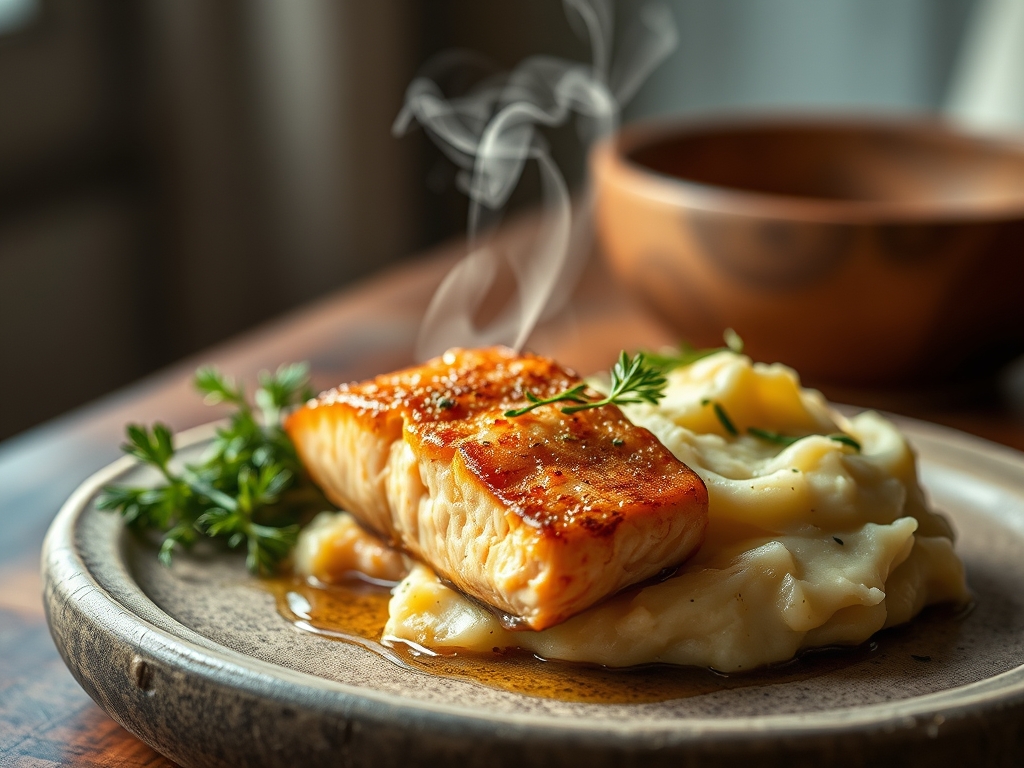
Picture this: a crisp, salt-flecked salmon skin shattering under your fork to reveal a translucent, buttery center that melts into a cloud of silk-smooth potatoes. It is the ultimate culinary paradox; the heavy, grounding comfort of the earth meeting the bright, fatty elegance of the sea. Mastering salmon and mashed potato recipes is less about following a list and more about managing the physics of heat and the chemistry of starch. We are moving beyond the dry fillets and lumpy spuds of the past. Today, we are engineering a plate where every forkful is a study in texture and temperature.
The secret lies in the contrast. Salmon offers a rich profile of Omega-3 fatty acids that requires a piquant or acidic counterpoint to prevent the palate from becoming fatigued. Meanwhile, the potato acts as a structural canvas, ready to absorb infused fats and aromatic oils. Whether you are hosting a high-stakes dinner party or simply treating yourself after a long Tuesday, these pairings elevate the humble tuber and the noble fish into a symphonic experience. We are going to dive deep into the cellular level of these ingredients to ensure your results are nothing short of restaurant-grade excellence.
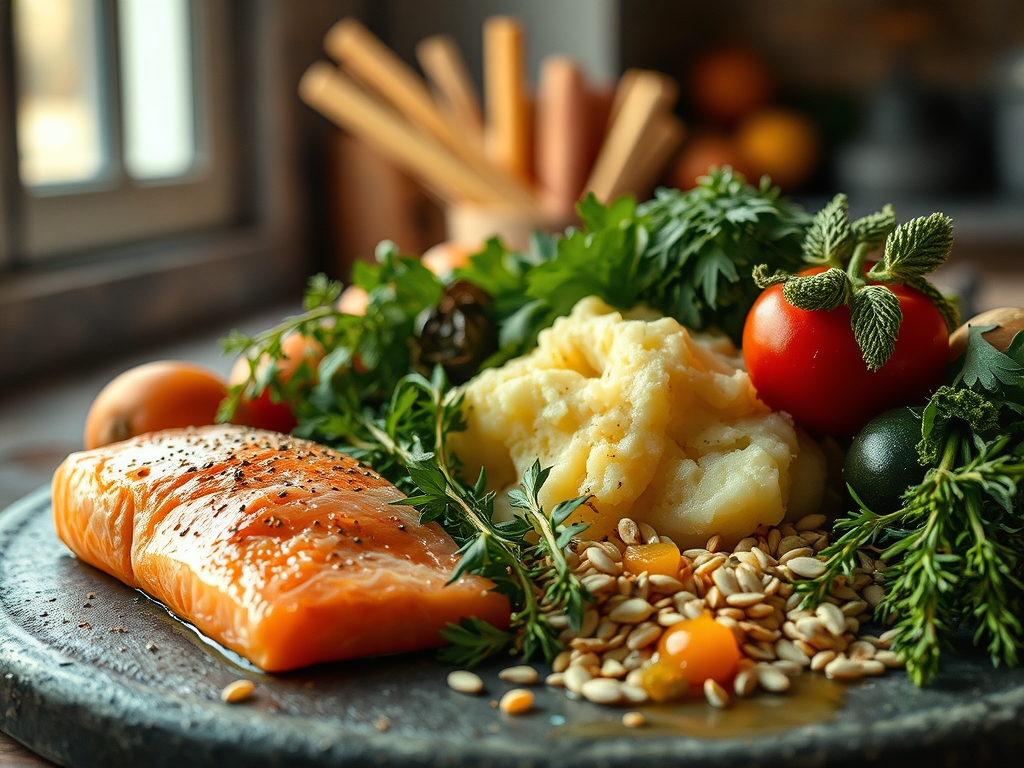
The Gathers:
To achieve a professional-grade result, your mise-en-place must be precise. Start with high-quality Atlantic or King salmon fillets, ideally center-cut for uniform thickness. For the potatoes, look for high-starch varieties like Russets for fluffiness or Yukon Golds for a naturally waxy, buttery mouthfeel. You will need high-fat European butter (which has less water content), heavy cream, and aromatics like fresh dill, Meyer lemons, and garlic cloves.
The Professional Toolset:
Gather your heavy-bottomed stainless steel skillet for the perfect sear; a digital scale for precise ingredient ratios; a microplane for zesting; and a saucier for emulsifying your liquids. A bench scraper is also vital for managing your workstation, while a ricer or food mill is non-negotiable if you want that coveted "cloud" texture without overworking the starch.
Smart Substitutions:
If you are looking to lighten the profile, swap heavy cream for a splash of starchy potato water and a drizzle of extra virgin olive oil to create a dairy-free emulsion. For a lower-carb base, a 50/50 blend of cauliflower and parsnips mimics the density of potatoes while adding a sophisticated, nutty sweetness. If salmon is unavailable, Arctic Char is a fantastic biological cousin that offers a similar fat content and flake structure.
The Clock: Timing the Chef's Flow
Efficiency in the kitchen is about understanding the "Chef's Flow." Total active time for these recipes is approximately 45 minutes, but the sequencing is what determines success. The potatoes take the longest to cook but are the most resilient to holding heat. Start them first. While they simmer, you can focus on the delicate task of rendering the salmon skin.
The Breakdown:
- Prep (15 mins): Peeling, cubing, and zesting.
- Boil (20 mins): Cooking the tubers until the cellular walls soften.
- The Sear (8-10 mins): This is the high-stakes window where you manage the Maillard reaction.
- The Rest (5 mins): Crucial for moisture redistribution within the fish proteins.
By the time your salmon is resting under a loose foil tent, you will be performing the final aerate and fold on your potatoes. This ensures both components hit the plate at their thermal peak.
The Masterclass: Step-by-Step Precision
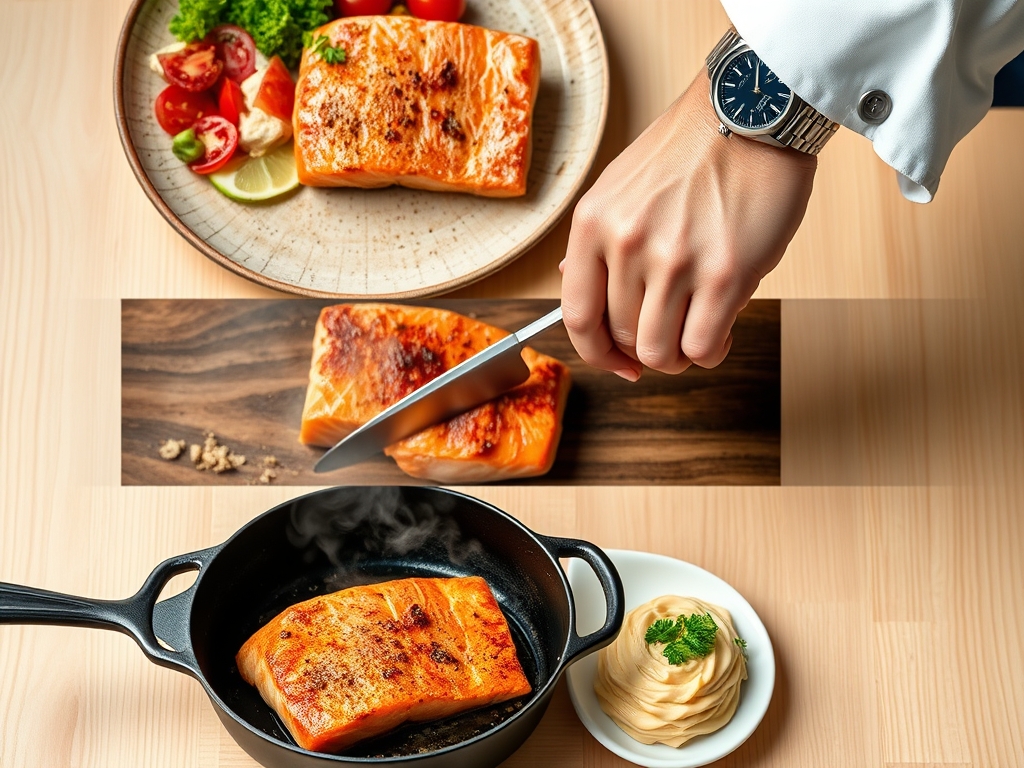
1. Preparing the Starch Foundation
Peel and cube your potatoes into uniform 1-inch pieces to ensure even heat distribution. Place them in a pot of cold, heavily salted water. Starting with cold water allows the outside and inside of the potato to reach the gelatinization point simultaneously.
Pro Tip: This prevents the outside from becoming sloughy before the center is cooked. Salting the water at the start seasons the starch molecules from the inside out, which is chemically more effective than salting at the end.
2. Achieving the Perfect Sear
Pat your salmon fillets bone-dry with paper towels. Moisture is the enemy of the sear. Heat your skillet until the oil reaches the shimmer point. Place the salmon skin-side down and press firmly with a flexible spatula for 30 seconds to prevent the skin from curling.
Pro Tip: This initial pressure ensures maximum surface area contact, facilitating an even Maillard reaction. The skin acts as a heat shield, protecting the delicate flesh from toughening through excessive protein coagulation.
3. The Low-Oxygen Infusion
While the salmon cooks, heat your cream and butter in a saucier with crushed garlic and herbs. Do not let it boil; a gentle simmer is enough to infuse the fats with aromatic oils without breaking the emulsion.
Pro Tip: Warm liquids integrate into the potato cells much more easily than cold ones. Cold dairy can shock the starch, leading to a gummy or "gluey" texture.
4. The Mechanical Breakdown
Drain the potatoes and let them steam-dry for two minutes. Pass them through a ricer or food mill into a warm bowl. This mechanical separation of the cells prevents the release of excess amylose, which is what makes potatoes sticky.
Pro Tip: Steam-drying is essential because it removes residual surface moisture. This creates "room" within the potato structure to soak up the flavored butter and cream you prepared.
5. The Emulsification Fold
Slowly incorporate your warm liquid into the riced potatoes using a silicone spatula. Fold gently rather than stirring vigorously. Finish with a hit of acid, like lemon juice or a teaspoon of piquant Dijon mustard, to brighten the heavy fats.
Pro Tip: Over-mixing causes the starch granules to rupture and release their sticky contents. Gentle folding maintains the aerated structure, resulting in a light, velvety mouthfeel.
6. The Final Assembly and Rest
Remove the salmon from the