
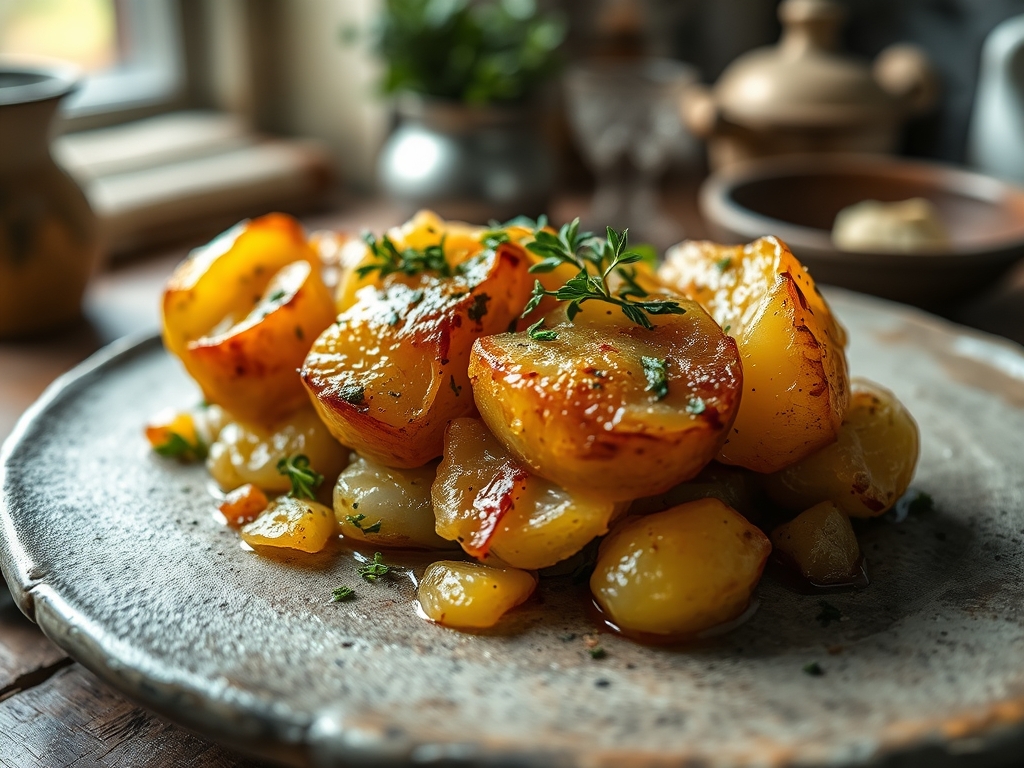
Close your eyes and imagine the heavy scent of woodsmoke mingling with the earthy perfume of root vegetables roasting over an open hearth. While history buffs will tell you the spud was a late arrival to Europe, recreating medieval times potato recipes allows us to bridge the gap between ancient culinary techniques and modern comfort. We are talking about deep, savory crusts and creamy interiors that would make any tavern master proud.
This isn't just about boiling a tuber; it is about the chemistry of the hearth. We are using the high heat of cast iron and the aromatic power of tallow and lard to transform the humble potato into something worthy of a feast. By applying historical preservation methods like salt-crusting and slow-rendering to our modern kitchen, we create textures that are vastly superior to your average side dish. Grab your apron and your favorite heavy-bottomed skillet; we are about to dive into a world where rustic meets refined.
The Gathers:
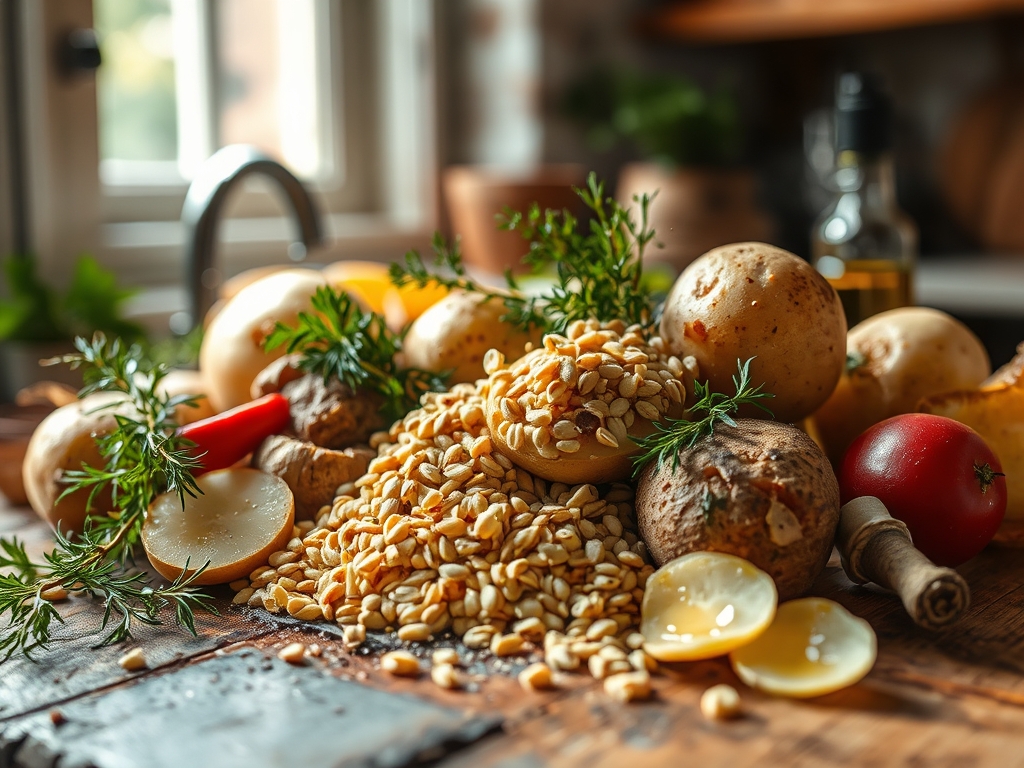
To execute these ten variations, your mise-en-place must be precise. You will need five pounds of waxy Yukon Gold potatoes for their high moisture content and structural integrity. For the fats, seek out high-quality duck fat or leaf lard; these have higher smoke points than butter and provide a viscous mouthfeel that vegetable oils simply cannot replicate. You will also need coarse sea salt, fresh rosemary, sage, and whole cloves of garlic.
For the tools, ensure you have a sharp chef's knife, a bench scraper for moving diced pieces without bruising the starch cells, and a microplane for zesting hard cheeses or nutmeg. If you lack duck fat, a Smart Substitution is clarified butter (ghee), which offers the same thermal stability without the milk solids that burn at high temperatures. Always keep a digital scale handy; precision in weight ensures that your salt-to-starch ratio remains perfect for that authentic crust.
The Clock
Preparation for these dishes requires about 20 minutes of active knife work. The "Chef's Flow" is essential here: start by scrubbing your potatoes to remove debris while your oven or heavy skillet preheats. Total cook time ranges from 45 to 60 minutes depending on the density of the cut. By synchronizing your prep, you can have the potatoes roasting while you prepare your secondary infusions, such as garlic-infused oils or herb salts. This overlapping workflow ensures that every component hits the table at the peak of its thermal cycle.
The Masterclass
1. The Hearth-Roasted Wedge
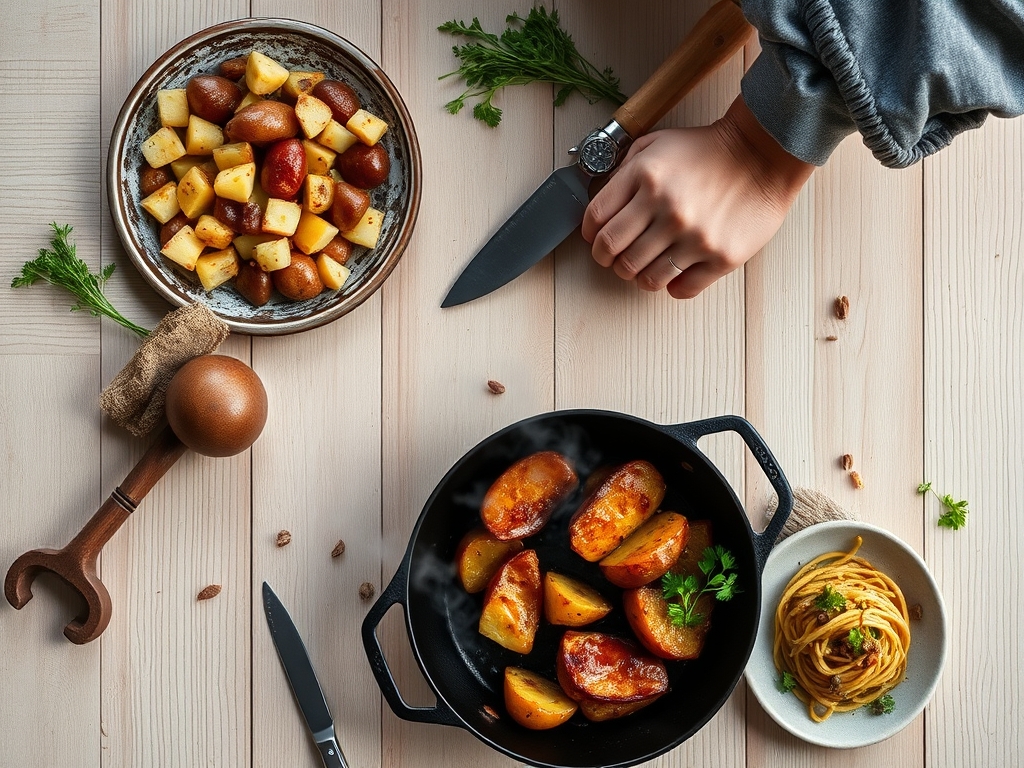
Slice your potatoes into thick, uniform longitudinal wedges. Toss them in a bowl with melted tallow and coarse salt until every surface is glistening. Arrange them on a preheated baking sheet to ensure immediate heat transfer.
Pro Tip: This technique utilizes the Maillard reaction, where amino acids and reducing sugars rearrange to create a savory brown crust. Preheating the pan prevents the starch from sticking by instantly searing the exterior.
2. The Salt-Crusted Tuber
Bury whole, unpeeled potatoes in a mound of damp sea salt mixed with egg whites. Bake until the salt forms a hard, porcelain-like shell that must be cracked open with a mallet or the back of a heavy spoon.
Pro Tip: The salt crust acts as a pressurized steam chamber. This prevents moisture loss through evaporation, resulting in a viscous, buttery interior texture that is impossible to achieve through standard roasting.
3. Smashed Garlic Rounds
Parboil small potatoes until tender, then use a bench scraper to flatten them into discs. Fry them in a heavy-bottomed skillet with smashed garlic cloves until the edges are jagged and golden.
Pro Tip: Flattening the potato increases the surface area exposed to the fat. This maximizes the area available for crisping while the center remains fluffy due to the initial parboiling.
4. The Herb-Infused Confit
Submerge sliced potatoes entirely in duck fat or olive oil inside a saucier. Cook at a very low temperature (around 200 degrees Fahrenheit) until they are translucent and tender.
Pro Tip: This is a fat-poaching method. Because oil is non-polar, it does not dissolve the potato's pectin, allowing the vegetable to become soft without falling apart or becoming mushy.
5. The Ash-Roasted Skin
Wrap potatoes in parchment and then foil, placing them directly into the embers of a fire or the bottom of a very hot oven. The skins will become dark and smoky while the inside turns to velvet.
Pro Tip: This method relies on conduction, where heat moves directly from the heat source into the potato. The parchment layer protects the skin from acrid carbonization while allowing smoke molecules to permeate the flesh.
6. The Peasant's Pottage
Dice potatoes into small cubes and simmer them in a rich bone broth with leeks and peppercorns. Use a wooden spoon to crush a few cubes against the side of the pot to thicken the liquid.
Pro Tip: As you crush the potatoes, they release amylopectin, a starch molecule that acts as a natural thickener. This creates a hearty, self-thickening stew without the need for flour or roux.
7. The Tallow Fries
Cut potatoes into thick batons and soak them in cold water to remove excess surface starch. Double-fry them in rendered beef tallow, once at a low temperature and once at a high temperature.
Pro Tip: The first fry gelatinizes the internal starch. The second fry dehydrates the surface, creating a microscopic network of air pockets that results in a shattering, piquant crunch.
8. The Spiced Mash with Nutmeg
Boil peeled potatoes and pass them through a ricer for a lump-free texture. Fold in heavy cream, butter, and freshly grated nutmeg using a microplane.
Pro Tip: Using a ricer prevents the over-working of the potato cells. If you use a mixer, you risk shearing the starch granules, which releases too much starch and turns the mash into a gluey, elastic mess.
9. The Skillet Galette
Thinly shave potatoes using a mandoline and layer them in concentric circles in a buttered skillet. Press down firmly with a weight as they cook to create a solid cake.
Pro Tip: This relies on starch-bonding. The natural sugars and starches act as a biological glue, fusing the layers together as the moisture evaporates from the edges.
10. The Honey-Glazed Root
Toss roasted potato chunks in a mixture of warmed honey, vinegar, and black pepper. Return them to the heat for five minutes until the glaze becomes tacky and dark.
Pro Tip: The vinegar provides an acid hit that balances the heavy sugars in the honey. This prevents the glaze from becoming cloying while the sugars undergo caramelization for a complex flavor profile.
The Deep Dive
From a macro perspective, these medieval times potato recipes are powerhouses of complex carbohydrates and potassium. While they are naturally gluten-free, you can make them Vegan by substituting tallow with avocado oil or coconut oil. For a Keto twist, replace half the potatoes with roasted cauliflower florets to lower the net carb count while maintaining the flavor profile.
The Fix-It:
- Soggy Potatoes: Usually caused by overcrowding the pan. Use two sheets to allow steam to escape.
- Burnt Garlic: Garlic burns faster than potatoes. Add your aromatics only in the last 10 minutes of roasting.
- Gluey Mash: You over-mixed. To fix, spread the mash in a pan, top with cheese, and bake into a gratin to mask the texture.
For meal prep, avoid the microwave. Reheat your potatoes in a heavy-bottomed skillet with a teaspoon of water and a lid. The steam will re-hydrate the starch while the pan's heat recrisps the bottom, giving you "day-one" quality.
The Wrap-Up
Mastering these medieval times potato recipes is about more than just a meal; it is about reclaiming the soul of the kitchen. By focusing on high-quality fats, precise heat management, and the science of starch, you turn a simple ingredient into a centerpiece. Whether you are hosting a themed dinner or just want a better Tuesday night side dish, these techniques will elevate your culinary game to legendary status. Now, get cooking and let the hearth fire roar!
The Kitchen Table
Can I use red potatoes for these recipes?
Yes, but red potatoes are waxier and hold their shape better. They are excellent for the Herb-Infused Confit or the Peasant's Pottage, but they will not produce the same fluffy interior as a Russet or Yukon Gold for mashing.
What is the best way to store leftovers?
Store them in an airtight glass container for up to four days. Avoid freezing roasted potatoes, as the ice crystals will rupture the starch cells, making them unpleasantly grainy and watery once they are thawed and reheated.
Why do my potatoes stick to the cast iron?
The pan likely was not hot enough before adding the fat and starch. Ensure the skillet is preheated until a drop of water dances on the surface. This creates a steam barrier that prevents the potato from bonding to the metal.
Is duck fat really necessary?
While not strictly necessary, duck fat has a unique molecular structure that provides a superior crust and savory depth. If you choose a substitute, ensure it is a high-smoke-point fat like ghee or lard to avoid acrid flavors.