
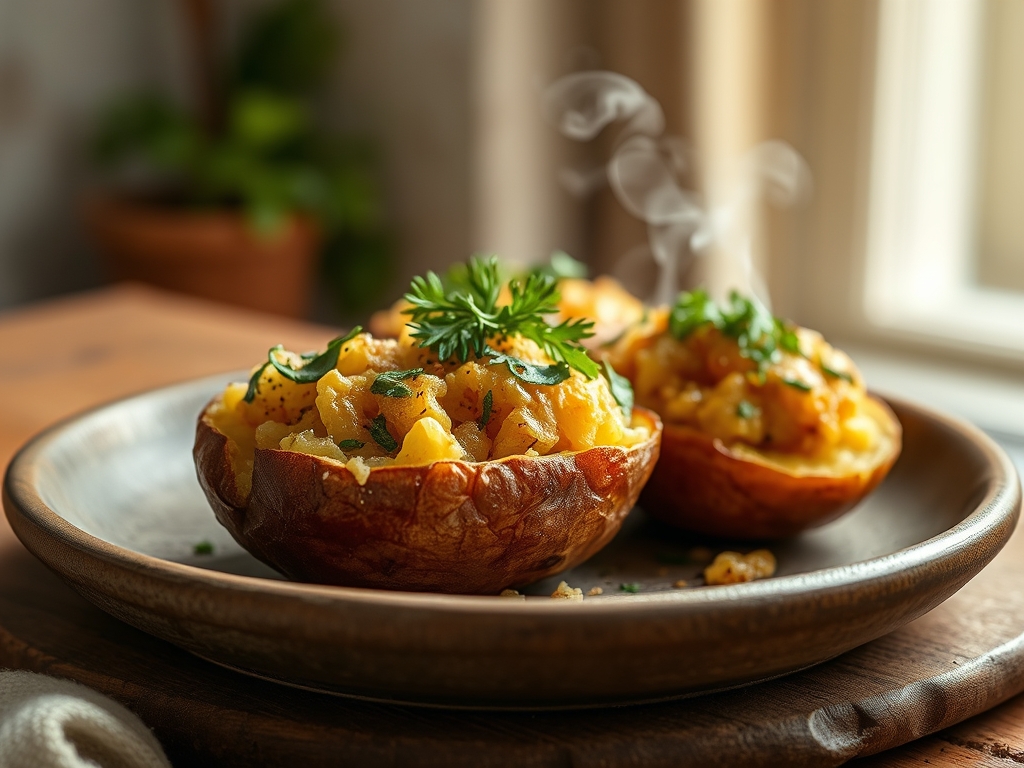
Imagine the sharp snap of salt-crusted skin yielding to a cloud of steaming, ivory starch. It is the ultimate culinary hug, a blank canvas waiting for a velvet infusion of butter and spice. Mastering easy stuffed potato recipes is not just about dinner; it is about reclaiming your evening with a meal that feels like a five star indulgence.
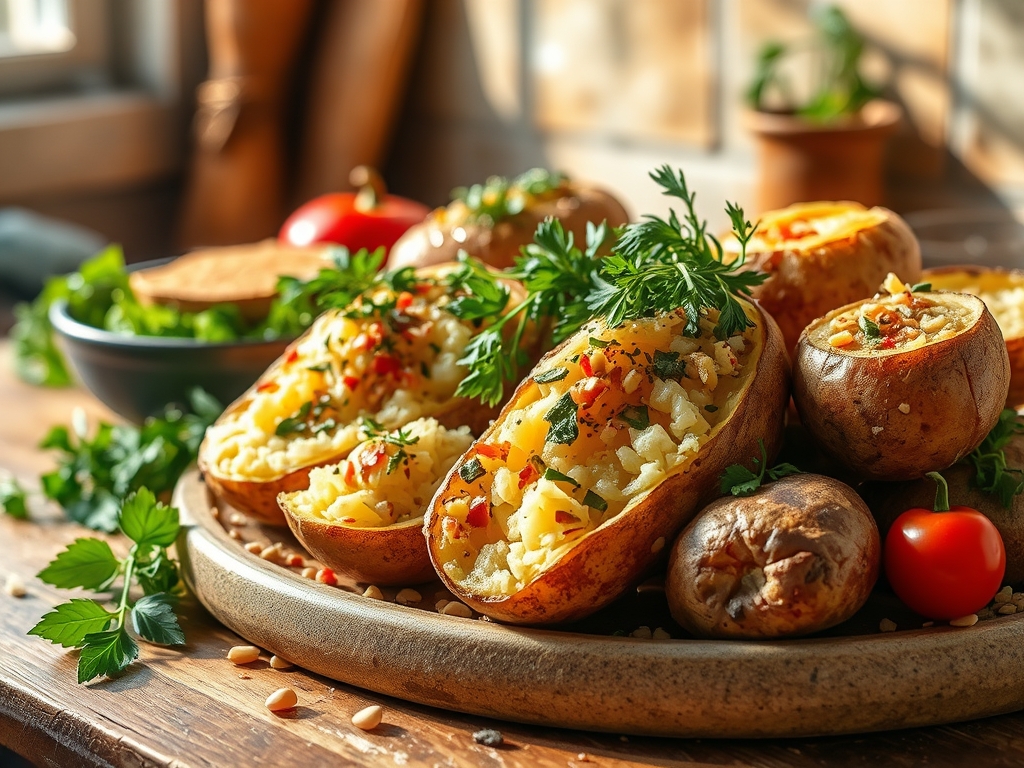
The Gathers:
To achieve a superior stuffed potato, we must respect the starch. Start with high-amylose Russet potatoes. Their low moisture content ensures a fluffy interior rather than a gummy one. You will need a digital scale to ensure uniform cooking times across your spuds. For the fillings, gather high-fat dairy to create a viscous mouthfeel; think sharp cheddar, heavy cream, or Greek yogurt for a piquant tang.
Your mise-en-place should include aromatics like scallions and garlic, which we will infuse into our fats. If you are looking for Smart Substitutions, swap heavy cream for coconut milk to maintain that silkiness without the lactose. Instead of bacon, try smoked paprika roasted chickpeas to mimic that smoky, rendered flavor profile. Always keep a microplane nearby to zest citrus or grate hard cheeses into a fine snow that melts instantly upon contact with the hot potato flesh.
The Clock:
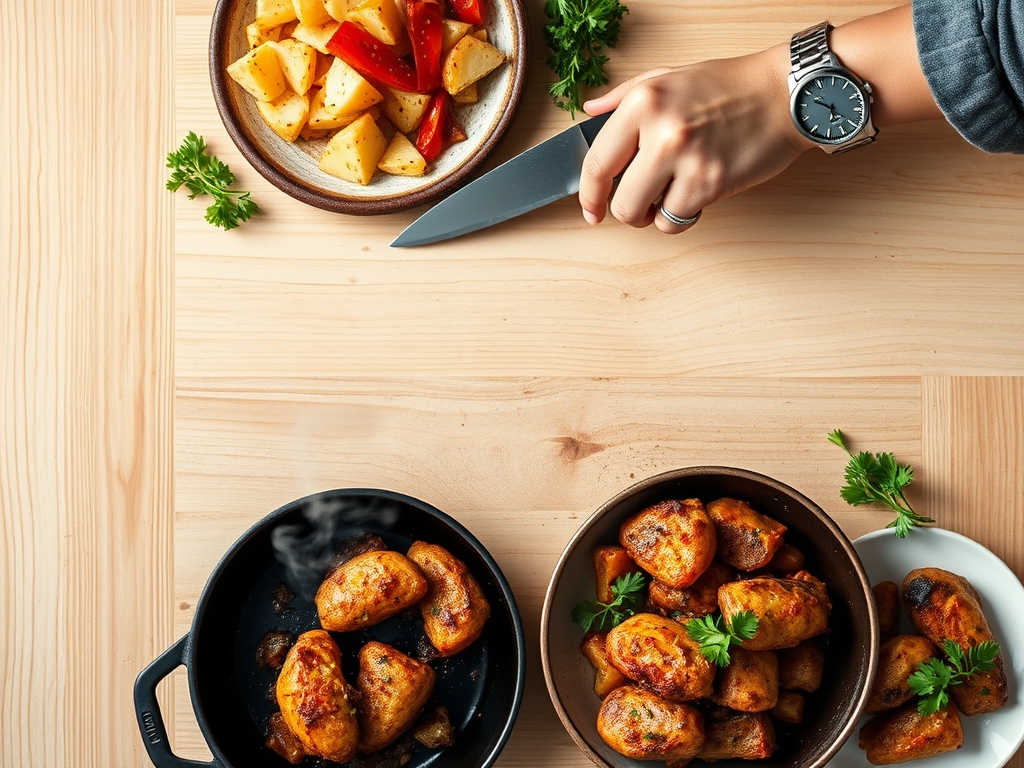
The "Chef's Flow" is all about overlapping tasks. Your total active time is a mere 15 minutes, while the oven does the heavy lifting for 60 minutes.
- The Initial Roast (60 minutes): This is passive time. Use this to prep your proteins and sauces.
- The Scoop and Mix (10 minutes): This is where the emulsification happens.
- The Final Crisp (5 to 8 minutes): A quick blast of heat to achieve the Maillard reaction on the cheese.
By the time the timer dings, your kitchen should be clean and your toppings should be staged in small glass bowls, ready for the final assembly.
The Masterclass:
1. The Surface Preparation
Scrub your potatoes and pat them bone-dry. Rub the skins with a high-smoke-point oil and a generous dusting of kosher salt. Use a fork to prick the skin three or four times.
Pro Tip: Pricking the skin allows steam to escape. If internal pressure builds too high without an exit, the cellular structure collapses, leading to a dense, soggy interior rather than a light, aerated crumb.
2. The High-Heat Roast
Place the potatoes directly on the oven rack at 425 degrees Fahrenheit. Do not use foil; foil traps moisture and steams the skin, preventing that signature crunch.
Pro Tip: Cooking directly on the rack maximizes airflow. This ensures thermal conductivity hits the potato from all angles, resulting in a uniform crust and preventing a flat, soft "bottom" on your spud.
3. The Precision Evacuation
Once the internal temperature hits 210 degrees Fahrenheit, remove them with tongs. Slice a thin wedge off the top and use a spoon to scoop the flesh into a warm bowl, leaving a sturdy quarter-inch shell.
Pro Tip: Work while the potato is hot to prevent "gumming." As the starch cools, the granules begin to bond; scooping while hot keeps the amylopectin chains loose and fluffy.
4. The Emulsion Phase
Add your butter and liquids to the hot potato flesh. Use a saucier to warm your cream and aromatics together before mixing. Fold gently until the mixture is smooth and glossy.
Pro Tip: Cold dairy shocks the hot starch, causing it to seize. Warming your liquids first ensures a stable emulsion, where the fats coat the starch granules perfectly for a melt-in-your-mouth texture.
5. The Flavor Infusion
Fold in your primary proteins, such as pulled pork, shredded chicken, or black beans. Use a bench scraper to tidy your workspace as you go. Stuff the mixture back into the shells, mounding it high.
Pro Tip: This is the stage of thermal carryover. The residual heat of the potato will continue to soften any raw aromatics like chives or green onions without overcooking them into mush.
6. The Maillard Finish
Top with a generous layer of cheese and place under the broiler. Watch for the cheese to bubble and develop deep brown spots.
Pro Tip: The Maillard reaction occurs when sugars and amino acids react under high heat. This creates hundreds of different flavor compounds, giving the cheese its savory, "toasty" complexity.
The Deep Dive:
When analyzing the macro nutrition of easy stuffed potato recipes, a medium Russet provides about 160 calories, primarily from complex carbohydrates. It is a potassium powerhouse, beating out bananas for mineral density. For Dietary Swaps, those on a Keto path should substitute the potato with a roasted cauliflower head, while Vegans can utilize cashew cream and nutritional yeast for a "cheesy" finish.
The Fix-It: Common Pitfalls
- Soggy Skin: This happens if you wrap the potato in foil. Fix it by placing the potato back in a dry, hot oven for 10 minutes to dehydrate the exterior.
- Gummy Filling: Over-mixing the potato flesh breaks the starch cells, releasing too much glue-like starch. Use a ricer or a gentle folding motion with a spatula to keep it light.
- Bland Interior: If the potato tastes flat, it lacks acidity. Add a splash of lemon juice or a teaspoon of vinegar to the mix to brighten the flavors.
Meal Prep Science: To reheat and maintain "day-one" quality, avoid the microwave. The microwave vibrates water molecules, which can make the starch "weep." Instead, use an air fryer at 350 degrees for 8 minutes. This restores the exterior crispness while gently warming the core.
The Wrap-Up:
There is a profound joy in transforming a humble tuber into a gourmet vessel of flavor. By understanding the science of starch and the chemistry of heat, you turn a simple dinner into a culinary event. These easy stuffed potato recipes are your secret weapon for busy weeknights or impressive weekend brunches. Grab your digital scale, fire up the oven, and let the aroma of roasting potatoes fill your home. You have the tools, the technique, and the "why" behind every step; now, go create something delicious!
The Kitchen Table:
How do I prevent my potatoes from exploding in the oven?
Always pierce the skin with a fork or knife before baking. This creates vents for steam to escape, preventing internal pressure from rupturing the potato's cellular structure during the high-heat roasting process.
Can I make stuffed potatoes ahead of time?
Yes. Roast and stuff the potatoes, then let them cool completely. Wrap them individually and refrigerate. When ready to eat, bake at 375 degrees until the internal temperature reaches 165 degrees for optimal safety and texture.
What is the best potato variety for stuffing?
Russet potatoes are the gold standard. Their high starch and low moisture content result in a dry, mealy texture that absorbs butter and cream efficiently, unlike waxy varieties like Red Bliss or Yukon Gold.
Why is my potato filling sticky or gluey?
Sticky filling is caused by over-working the starch. When you mash too vigorously, the starch granules rupture and release amylose, creating a paste. Use a potato ricer or a light hand to keep the texture fluffy.