
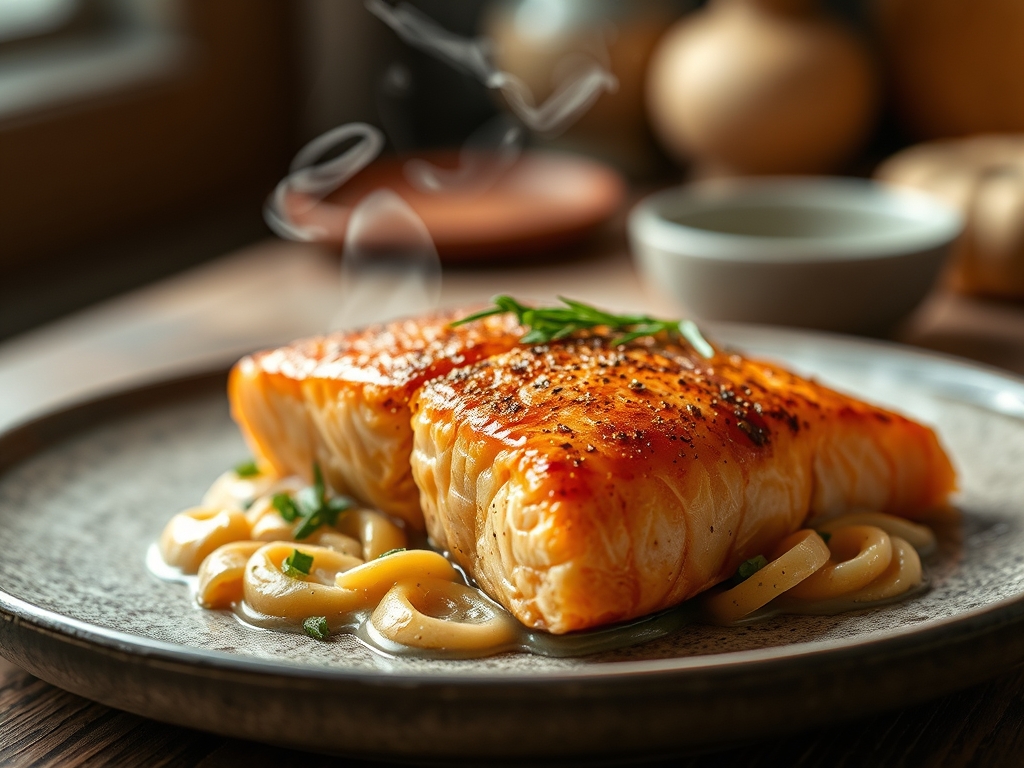
Close your eyes and imagine the most buttery, marbled piece of protein you have ever encountered. This is not just fish; this is the Wagyu of the sea. When you master ora king salmon recipes, you are no longer just cooking dinner; you are orchestrating a symphony of high-fat content and delicate muscle fibers. The texture is almost unnervingly silky, a result of the specific breeding that gives this New Zealand king salmon its legendary status among Michelin-starred chefs. We are going to treat this fish with the reverence it deserves by utilizing high-heat searing and precise temperature control to ensure that every bite melts like sea-salted fudge on your tongue.
The Gathers:
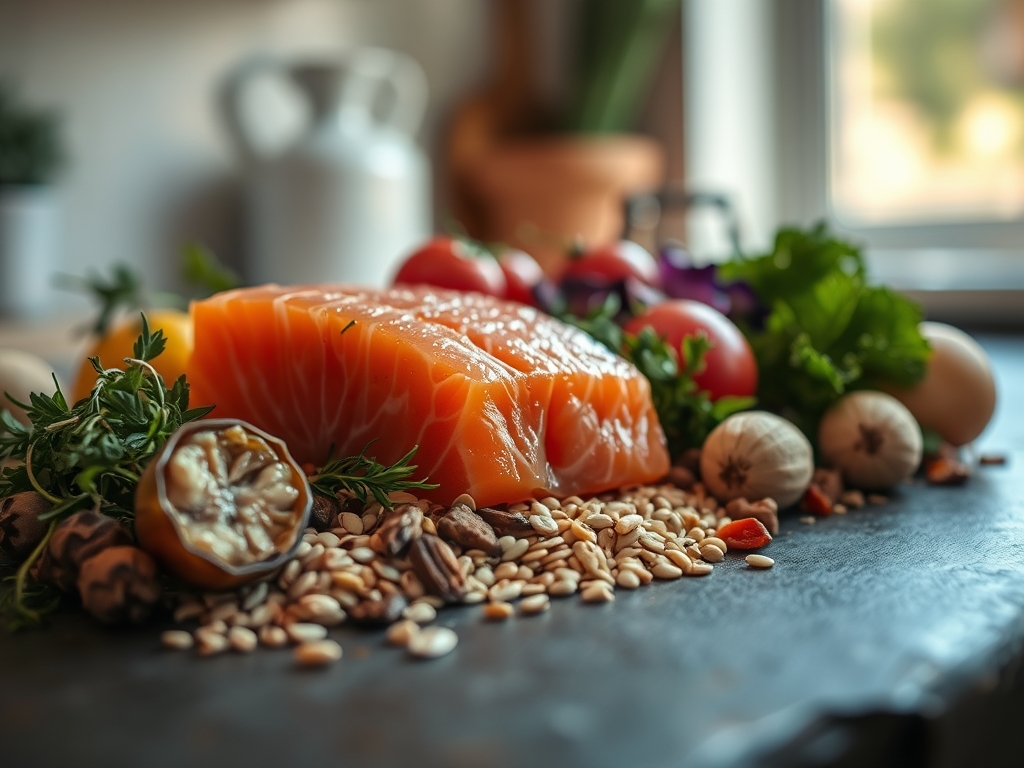
Before we touch the heat, we must assemble our mise-en-place. For a standard four-person service, you will need four 6-ounce center-cut Ora King fillets. Because this fish has a higher fat-to-flesh ratio than Atlantic varieties, it requires a viscous fat for searing; reach for avocado oil or clarified butter (ghee) which boasts a high smoke point of 450 degrees Fahrenheit. You will also need a bunch of fresh thyme, three cloves of garlic, and a saucier for your finishing emulsion.
For the seasoning, skip the table salt. Use a high-quality Maldon sea salt to provide a structural crunch that contrasts the soft flesh. If you want to infuse a bright, piquant note, grab a lemon and your microplane to zest directly over the fish at the final moment.
Smart Substitutions: If you cannot source Ora King, look for Copper River King salmon or high-grade steelhead trout. For a vegan-friendly side that mimics the "fatty" mouthfeel of the salmon, prepare a side of king oyster mushrooms sliced into medallions and seared in the same manner. If you are avoiding dairy, swap the finishing butter for a cold-pressed macadamia nut oil to maintain that luxurious, nutty profile.
The Clock
Preparation for this dish is remarkably swift, requiring only 10 minutes of active knife work and 12 minutes of thermal application. However, the "Chef's Flow" is what separates the amateurs from the pros. Your flow should follow this sequence: Tempering, Drying, Searing, Resting.
Allowing the fish to sit at room temperature for 15 minutes before it hits the heavy-bottomed skillet prevents the muscle fibers from seizing. While the fish tempers, you should be preparing your garnish. The actual cook time is roughly 3 to 4 minutes on the skin side and a mere 60 seconds on the flesh side. Total time from fridge to table is approximately 25 minutes.
The Masterclass
1. The Desiccation Ritual
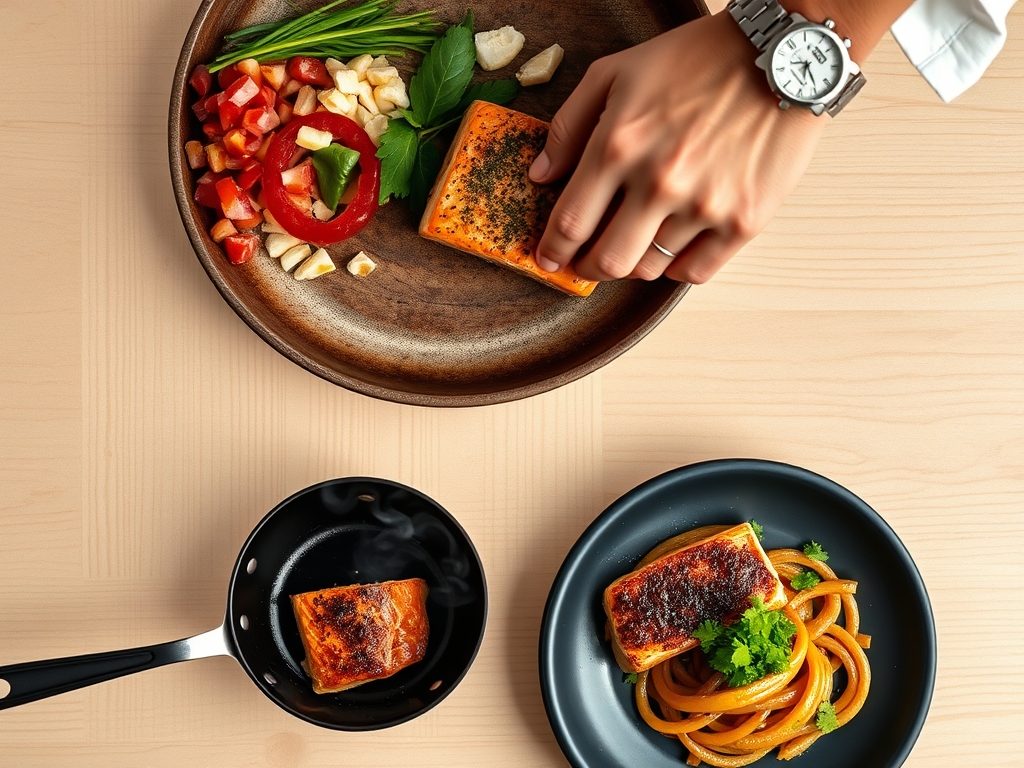
Use a paper towel to press firmly against the skin of the salmon. You want it bone-dry. Use a bench scraper to move your fillets onto a clean surface. Moisture is the enemy of the Maillard reaction; if the skin is damp, it will steam rather than crisp.
Pro Tip: This is known as surface evaporation. By removing every molecule of water from the skin, you allow the heat to immediately begin breaking down the collagen into a crispy, glass-like crust rather than spending energy boiling off surface water.
2. The Weight of Gravity
Heat your skillet until the oil begins to shimmer but not smoke. Place the fillets skin-side down and immediately press them with a heavy spatula or a grill press for 30 seconds. This prevents the natural curling of the skin as the proteins denature.
Pro Tip: This technique ensures uniform heat distribution. When salmon skin hits heat, the proteins contract. By applying physical pressure, you force the entire surface area of the skin to remain in contact with the pan, ensuring an even, golden-brown finish.
3. The Arrosé Technique
Once the skin is crispy, flip the fish using tongs or a fish spatula. Toss in your butter, smashed garlic, and thyme. Tilt the pan so the foaming butter pools at the bottom, then use a large spoon to continuously drench the salmon in the hot, aromatic fat.
Pro Tip: This is convection cooking within a fat medium. The hot butter fills the gaps between the muscle fibers, gently cooking the interior while the garlic and thyme infuse the fat with fat-soluble flavor compounds.
4. The Thermal Exit
Remove the fish when the internal temperature reaches 120 degrees Fahrenheit for a perfect medium-rare. Use a digital scale or a meat thermometer to be exact. The temperature will continue to rise as it sits.
Pro Tip: This is thermal carryover. Residual heat trapped in the outer layers of the fish will continue to move toward the center even after it leaves the pan, typically raising the internal temperature by another 5 to 7 degrees.
5. The Emulsion Finish
While the fish rests, deglaze the pan with a splash of dry white wine or verjus. Whisk in a cold knob of butter to aerate the sauce into a silky beurre blanc.
Pro Tip: Cold butter is essential for a stable emulsion. The milk solids and fats bond with the liquid more effectively when introduced at a lower temperature, preventing the sauce from breaking into a greasy mess.
6. The Final Zest
Plate the salmon skin-side up to preserve the crunch. Use your microplane to shower the dish with lemon zest and a final pinch of flaky salt.
Pro Tip: The citric acid in the zest provides a chemical balance to the high fat content of the Ora King. It cuts through the richness, refreshing the palate between every bite.
The Deep Dive
Ora King salmon is a nutritional powerhouse. A single 6-ounce serving contains roughly 34 grams of protein and 20 grams of heart-healthy fats, specifically Omega-3 fatty acids. It is naturally Keto and Gluten-Free. For a vegan alternative, use the same searing technique on thick "steaks" of cauliflower or celery root to achieve a similar caramelized exterior.
The Fix-It:
- Skin sticking? Your pan wasn't hot enough or you tried to flip it too early. The fish will naturally release from the pan once the proteins have fully caramelized.
- White gunk appearing? This is albumin, a protein that pushes out when the fish is cooked too fast or too long. Lower your heat and pull the fish earlier.
- Soggy skin? You likely covered the fish with a lid or didn't dry it enough. Never cover searing salmon; it traps steam.
Meal Prep: To reheat, avoid the microwave at all costs. It will turn the fats rancid and the texture rubbery. Instead, place the salmon in a 275-degree oven with a tablespoon of water covered by foil for 8 minutes. This creates a gentle steam environment that revives the moisture without overcooking the core.
The Wrap-Up
You are now equipped with the technical prowess to master ora king salmon recipes in your own kitchen. Remember; this fish is a luxury ingredient that thrives on simplicity and precision. Focus on that skin-to-pan contact, respect the rest period, and don't be afraid of the fat. You have the tools, the science, and the flavor profile to turn a Tuesday night into a five-star experience. Now, go get that sear!
The Kitchen Table
How do I know when the salmon is done?
Use a digital thermometer to hit 120 degrees Fahrenheit for medium-rare. The flesh should slightly pull apart into translucent flakes when pressed gently with a fork. Avoid cooking until opaque, as this indicates the healthy fats have rendered out.
Can I cook Ora King salmon from frozen?
It is not recommended. For the best texture, thaw the salmon overnight in the refrigerator. Cooking from frozen prevents the Maillard reaction on the skin and results in an unevenly cooked, tough interior that loses its signature buttery mouthfeel.
Why is my salmon skin not getting crispy?
The most common culprit is residual moisture. Use a paper towel to pat the skin until it is completely dry. Additionally, ensure your oil is shimmering hot before the fish touches the pan to trigger immediate protein coagulation.
What is the best pan for searing salmon?
A heavy-bottomed stainless steel or cast-iron skillet is best. These materials retain heat efficiently, preventing the pan temperature from dropping when the cold fish is added, which is crucial for achieving a professional, golden-brown crust.