
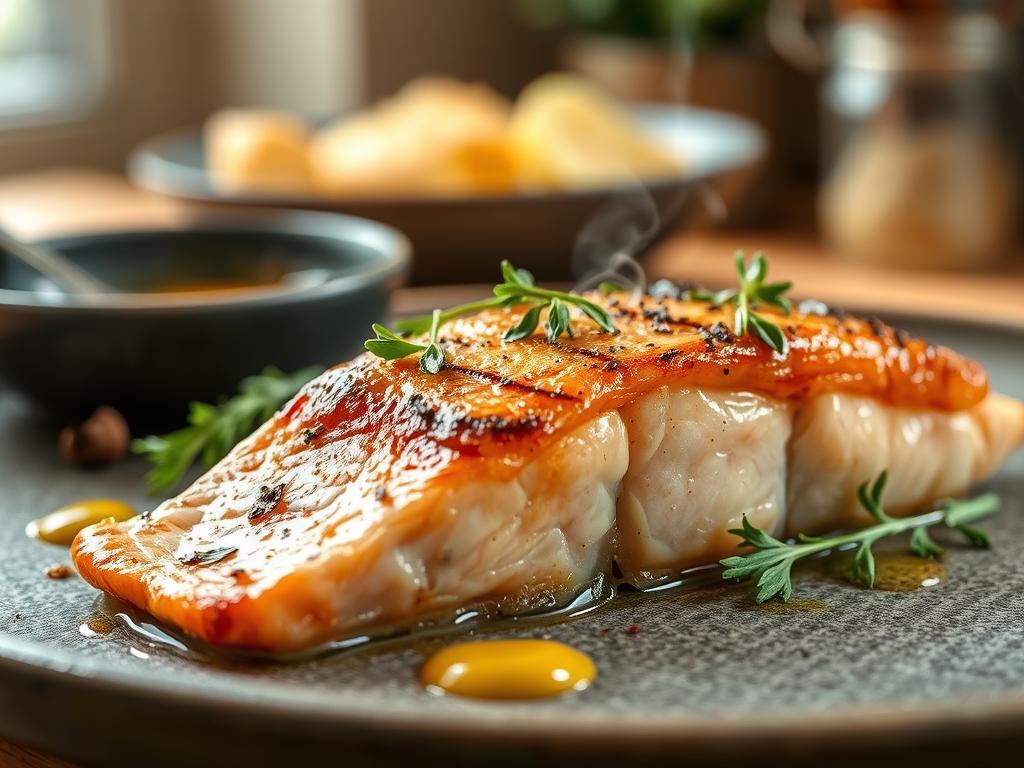
Imagine a kitchen filled with the sharp, piquant aroma of stone ground seeds and the buttery scent of rendering omega 3 fats. If you are tired of dry, uninspired fish, mastering baked salmon recipes with mustard is your gateway to a professional grade dinner. This dish is a structural marvel; the mustard acts as both a flavor powerhouse and a protective chemical shield. It locks in moisture while creating a crust that shatters under the fork. We are not just cooking; we are manipulating proteins and acidity to achieve that perfect, translucent flake. Grab your apron because we are about to turn a simple fillet into a restaurant quality masterpiece using science as our secret weapon.
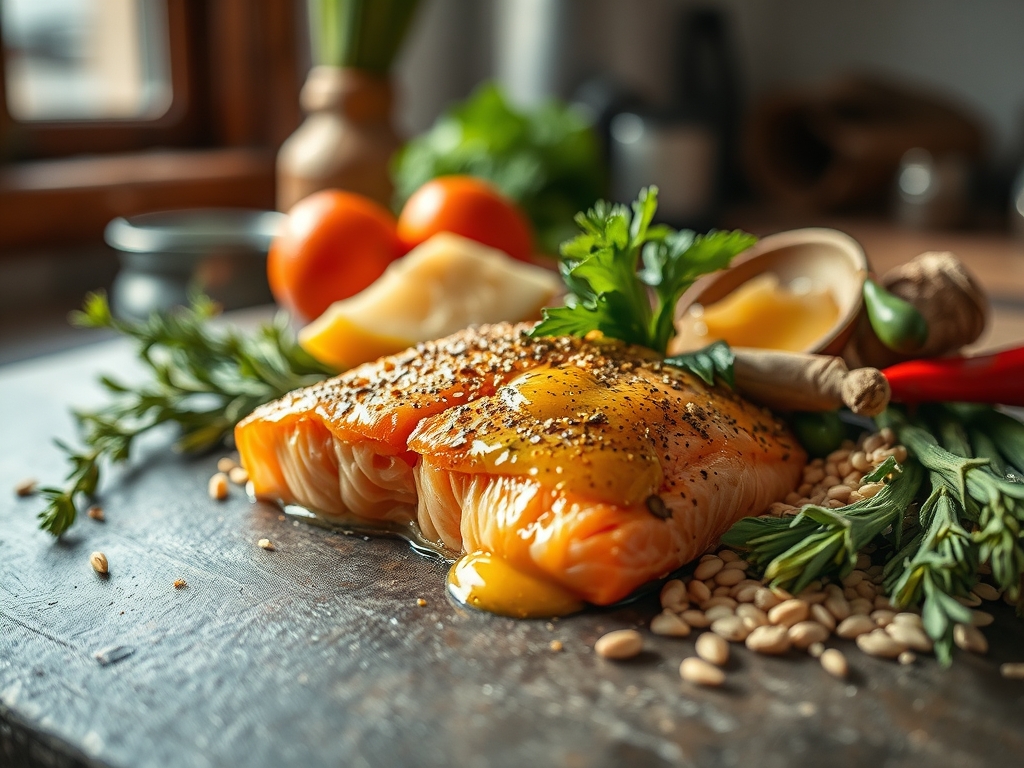
The Gathers:
Your mise-en-place is the foundation of culinary success. Start with a high quality center cut salmon fillet, preferably wild caught for its superior fat profile. You will need a viscous Dijon mustard to serve as the primary emulsifier. Unlike yellow mustard, Dijon contains verjuice or white wine, providing the acidity necessary to denature surface proteins.
Complement this with whole grain mustard for texture. The intact seeds offer a delightful pop and visual contrast. For the aromatic layer, gather fresh dill, a microplane for zesting organic lemons, and high quality kosher salt. The salt is vital; it draws out a small amount of moisture to create a concentrated brine that seasons the fish deeply.
Smart Substitutions: If you are out of Dijon, a spicy brown mustard works well, though it is more aggressive. For a honey mustard variation, swap the zest for a teaspoon of high quality clover honey. If you require a sodium conscious version, increase the lemon zest and use a dash of coconut aminos to maintain that savory depth without the salt spike.
The Clock
Efficiency in the kitchen is about the Chef's Flow. This entire process takes exactly 25 minutes from the moment you touch the fridge handle to the first bite.
Prep Time: 10 Minutes. This includes patting the fish dry (non negotiable for crust development), whisking your glaze in a small saucier or bowl, and prepping your garnishes.
Cook Time: 12 to 15 Minutes. This depends entirely on the thickness of your fillet.
Rest Time: 3 Minutes. Never skip this. Resting allows the internal juices to redistribute.
The flow is simple: Preheat your oven to 400 degrees Fahrenheit while you prep. By the time your oven chime rings, your salmon should be glazed and ready for its thermal transformation.
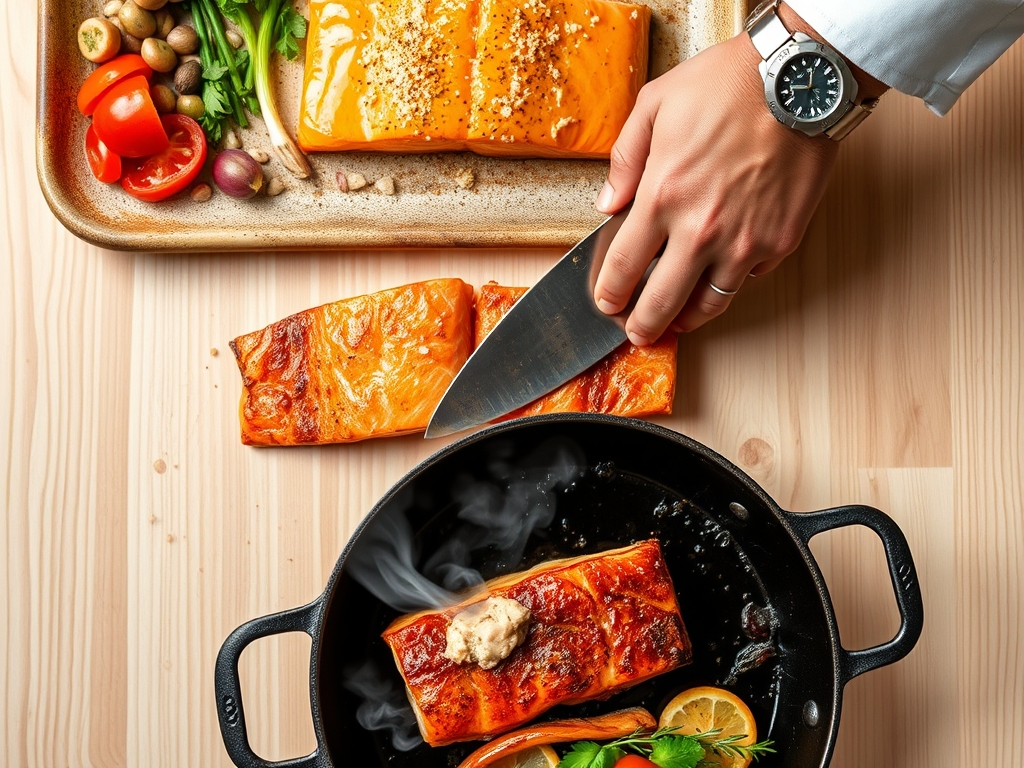
The Masterclass:
1. The Desiccation Phase
Before a single drop of mustard touches the fish, you must use a paper towel to pat the skin and flesh bone dry. Any surface moisture will create steam, which is the enemy of a crisp crust. Use a bench scraper to move the fillets onto a parchment lined baking sheet.
Pro Tip: This is known as surface desiccation. By removing water, you ensure the mustard glaze adheres to the protein fibers rather than sliding off in a watery mess.
2. The Emulsion Application
Whisk your Dijon, whole grain mustard, and lemon zest until the mixture is thick and stable. Use a silicone pastry brush to apply a generous layer over the top and sides of the salmon.
Pro Tip: Mustard is a natural emulsifier containing mucilage. This creates a viscous barrier that prevents the delicate fish fats from escaping, effectively "self basting" the salmon from the inside out.
3. The Thermal Blast
Slide the tray into the center rack of the oven. The high heat will immediately begin to set the mustard proteins. If you are using a thick fillet, keep it in for the full 15 minutes.
Pro Tip: Watch for the Maillard reaction. This is the chemical reaction between amino acids and reducing sugars that gives the mustard crust its deep, savory flavor profile and golden brown hue.
4. The Internal Check
Use a digital scale or, more importantly, an instant read thermometer to check the thickest part of the fish. You are aiming for 135 degrees Fahrenheit for a perfect medium.
Pro Tip: Account for thermal carryover. The internal temperature will rise about 5 degrees after you remove it from the oven. Pulling the fish at 135 ensures it reaches a perfect 140 during the rest period.
The Deep Dive
Macro Nutrition
Salmon is a nutritional powerhouse. A 6 ounce serving provides roughly 34 grams of high quality protein and 18 grams of healthy fats, primarily Omega 3 fatty acids. The mustard glaze adds negligible calories but massive amounts of antioxidants and phytonutrients.
Dietary Swaps
Keto/Low Carb: This recipe is naturally keto friendly. Just ensure your mustard has no added cane sugar.
Vegan: Try this same glaze on a thick slice of roasted cauliflower or a "steak" of firm tofu.
Gluten Free: Most mustards are GF, but always check the label for malt vinegar or thickening agents that might contain wheat.
The Fix-It: Common Pitfalls
- The White Gunk: If you see white bubbles (albumin) pushing out of the fish, it is overcooked. The muscle fibers have contracted too tightly and squeezed out the protein. Fix: Reduce your cook time by 2 minutes next time.
- Soggy Bottoms: If the skin is rubbery, you didn't dry it enough or the oven wasn't hot enough. Fix: Use a heavy bottomed skillet to sear the skin side down for 2 minutes before finishing in the oven.
- Glaze Slide: If the mustard slips off, the fish was too cold. Fix: Let the salmon sit at room temperature for 10 minutes before coating.
Meal Prep and Reheating
To maintain "day one" quality, do not microwave your leftovers on high. The intense radiation will turn the fats rancid and the texture rubbery. Instead, use a toaster oven at 275 degrees Fahrenheit for 8 minutes. This gently rewarms the fats without re cooking the protein.
The Wrap-Up
Mastering baked salmon recipes with mustard is a fundamental skill that bridges the gap between home cooking and culinary artistry. By understanding the science of emulsification and thermal carryover, you have moved beyond following a recipe to actually understanding the "why" behind the flavor. This dish is vibrant, healthy, and incredibly sophisticated. Now, grab your tongs, plate that beautiful fillet, and enjoy the crisp, tangy reward of your scientific labor!
The Kitchen Table
How do I know when the salmon is done?
The most reliable method is using an instant read thermometer to reach 135 degrees Fahrenheit. Visually, the flesh should change from translucent to opaque and flake easily when pressed gently with a fork.
Can I use yellow mustard instead of Dijon?
Yellow mustard is too watery and high in vinegar for this specific crust. It lacks the protein structure and depth of Dijon, which may result in a runny sauce rather than a crisp, savory crust.
Why did my salmon release white stuff?
That white substance is albumin, a liquid protein. It appears when the salmon is cooked too quickly or at too high a temperature, causing the muscle fibers to contract and squeeze the protein to the surface.
How long can I store leftover mustard salmon?
Store leftovers in an airtight container in the refrigerator for up to three days. For the best texture, reheat gently in an oven or air fryer to maintain the integrity of the mustard crust.