
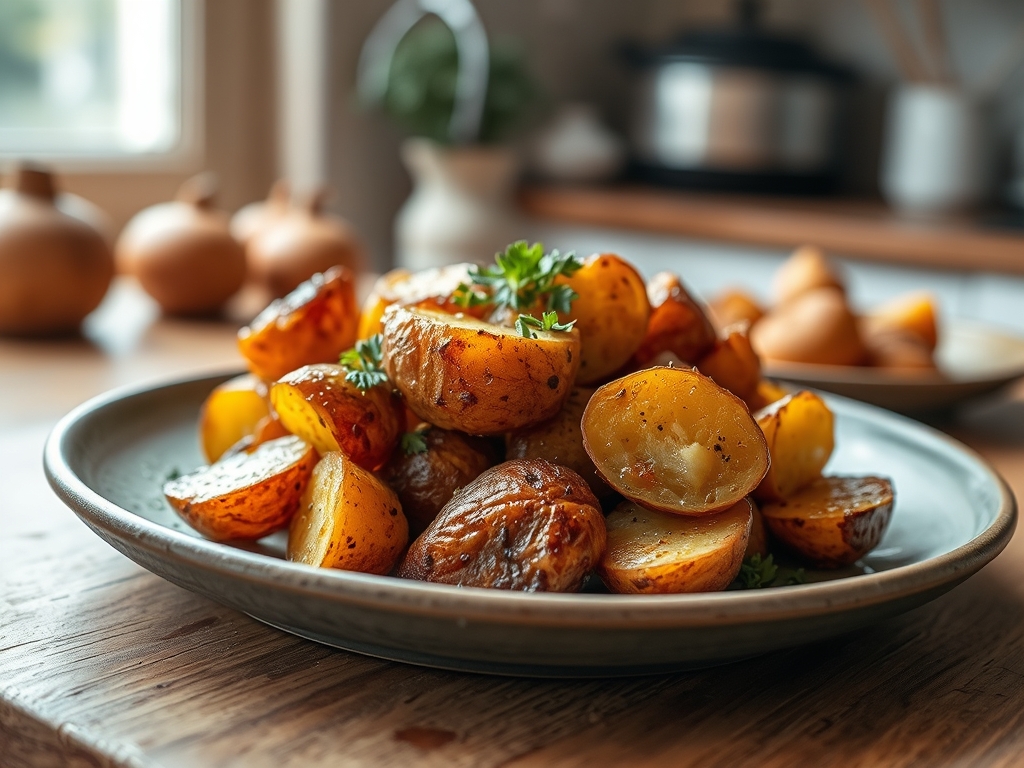
Picture the sound of a glass shattering; now imagine that sound is actually the crust of a perfectly dehydrated tuber yielding to your teeth. That is the magic of russet potato recipes air fryer enthusiasts live for. It is not just about heat; it is about the violent evaporation of surface moisture that leaves behind a honeycomb of starch. Russets are the undisputed royalty of this process because their high starch content and low moisture profile create a structural integrity that waxy potatoes simply cannot mimic. When you toss them in a high velocity air stream, you are essentially mimicking a commercial dehydrator and a deep fryer simultaneously. The result is a snack that feels indulgent but remains remarkably light. We are moving beyond the soggy fries of your childhood. Today, we are mastering the art of the crunch through precision heat and molecular timing. Grab your favorite apron and clear some counter space; we are about to turn a humble root vegetable into a masterpiece of culinary engineering.
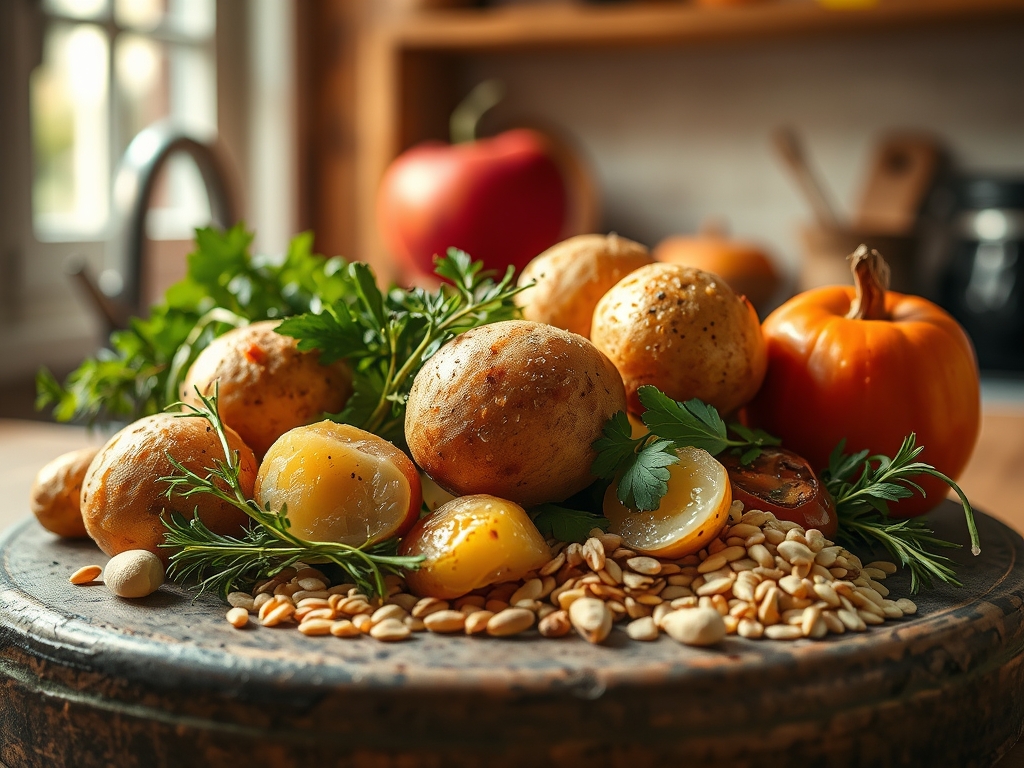
The Gathers:
To achieve elite results, your mise-en-place must be intentional. You will need three large Russet potatoes, approximately 800 grams total. Using a digital scale ensures consistency, as size variations dictate uneven cook times. You will also need high-smoke-point fats like avocado oil or clarified butter; these can withstand the 400 degree Fahrenheit environment without breaking down into acrid compounds. For the seasoning, gather fine sea salt, smoked paprika for a piquant finish, and freshly cracked black pepper.
Smart Substitutions: If you are avoiding nightshades, swap paprika for toasted cumin or sumac to maintain that earthy depth. For a dairy-free umami bomb, nutritional yeast provides a cheesy profile that adheres beautifully to the rough surface of the potato. Always have a bench scraper nearby to clear your station and a microplane for finishing the snacks with a dusting of hard cheese or citrus zest.
The Clock:
Efficiency in the kitchen relies on what I call the Chef's Flow. Your total active prep time is 15 minutes, while the air fryer does the heavy lifting for 20 to 25 minutes. However, the secret "hidden" time is the 30 minute cold water soak. This step is non-negotiable. While the potatoes soak to remove excess surface starch, use that window to prepare your dipping sauces or clean your saucier. Total time from pantry to plate is roughly 70 minutes. By syncing your prep with the preheating cycle of your machine, you ensure the potatoes hit the basket at the peak of their readiness, preventing the dreaded grey oxidation.
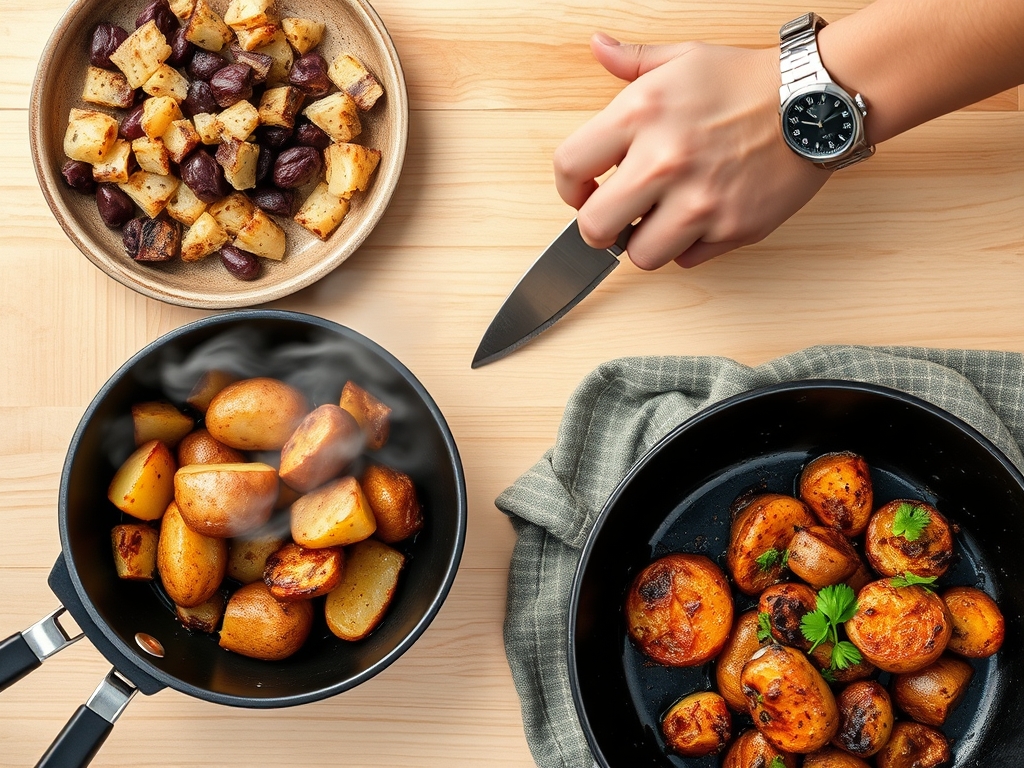
The Masterclass:
1. The Precision Cut
Using a sharp chef knife or a mandoline, slice your russets into uniform batons or rounds. Aim for a thickness of exactly one quarter inch. Consistency is the enemy of the "burnt yet raw" phenomenon.
Pro Tip: Uniformity ensures that the Maillard reaction—the chemical reaction between amino acids and reducing sugars—occurs at the same rate across the entire batch, preventing localized carbonization.
2. The Osmotic Soak
Submerge your cuts in a bowl of ice-cold water for at least 30 minutes. You will notice the water becomes cloudy; this is the free starch escaping.
Pro Tip: Removing surface starch prevents the potatoes from sticking together in a viscous mass and allows the hot air to circulate around each individual piece for maximum crispness.
3. The Thermal Shock Prep
Drain the potatoes and pat them bone-dry with a lint-free kitchen towel. Any residual moisture will turn to steam in the air fryer, leading to a limp texture rather than a crisp one.
Pro Tip: This is known as managing the latent heat of vaporization. If the surface is dry, the energy goes immediately into browning rather than evaporating surface water.
4. The Lipid Coating
In a large mixing bowl, toss the dry potatoes with two tablespoons of oil. Use your hands to ensure every millimeter of the surface is coated in a thin, shimmering film.
Pro Tip: The oil acts as a heat conductor, bridging the gap between the hot air and the potato skin to infuse the starch with rapid, even heat.
5. The Aerated Roast
Arrange the potatoes in the air fryer basket. Do not overcrowd; the air must be able to aerate the spaces between the cuts. Cook at 400 degrees Fahrenheit, shaking the basket every 8 minutes.
Pro Tip: Shaking redistributes the fats and prevents "cool spots" where the potatoes touch the basket, ensuring a 360-degree crunch through convection heating.
6. The Final Seasoning
Once the potatoes are golden brown and sound like dry wood when shaken, remove them. Immediately toss them with salt and spices while they are still hot.
Pro Tip: This utilizes thermal carryover. The residual heat allows the spices to bloom and the salt to adhere to the remaining surface oils before they cool and solidify.
The Deep Dive:
From a macro perspective, russets are a powerhouse of complex carbohydrates and potassium. A standard serving provides roughly 160 calories, 4 grams of protein, and 37 grams of carbs. If you are looking for dietary swaps, this recipe is naturally gluten-free. For a vegan-friendly umami boost, use truffle oil instead of butter. If you are following a keto lifestyle, please note that russets are high in starch; you might swap them for radishes or turnips using this same method, though the crunch will be less pronounced.
The Fix-It:
- Soggy Results: You likely overcrowded the basket. Cook in smaller batches to allow steam to escape.
- Burnt Edges: Your cuts were too thin or uneven. Use a mandoline for robotic precision next time.
- Bland Interior: You skipped the salt-toss while hot. Salt needs heat to "stick" and penetrate the surface.
Meal Prep: To reheat, never use a microwave; it turns starch into rubber. Instead, toss leftovers back into the air fryer at 350 degrees for 3 to 5 minutes. This re-activates the fats and recrisps the exterior to "day-one" quality.
The Wrap-Up:
There you have it; the science of the perfect crunch is now in your hands. Mastering russet potato recipes air fryer style is about respecting the starch and controlling the moisture. When you hear that first snap, you will know the chemistry worked. This is more than a snack; it is a culinary victory. Go forth, get salty, and enjoy the most satisfying crunch of your life!
The Kitchen Table:
Why are my air fried potatoes not crispy?
The most common culprit is residual surface moisture. If the potatoes are not bone-dry before oiling, they will steam instead of fry. Always pat them down thoroughly with a clean towel to ensure the Maillard reaction can begin immediately.
Do I really need to soak the potatoes?
Yes. Soaking removes excess surface starch that causes the potatoes to gum up and stick together. This process also helps achieve a lighter, more "shatter-like" crunch by allowing the exterior to dehydrate more efficiently during the cooking cycle.
Can I use olive oil in the air fryer?
Standard olive oil is fine, but extra virgin olive oil has a lower smoke point. For the best results at 400 degrees, use avocado oil or grapeseed oil. These fats remain stable at high temperatures without developing bitter, off-flavors.
How do I stop the potatoes from sticking to the basket?
Preheat your air fryer for five minutes before adding the potatoes. The initial blast of heat creates an immediate sear on the potato surface, which prevents the starch from bonding to the metal grate of the basket.