
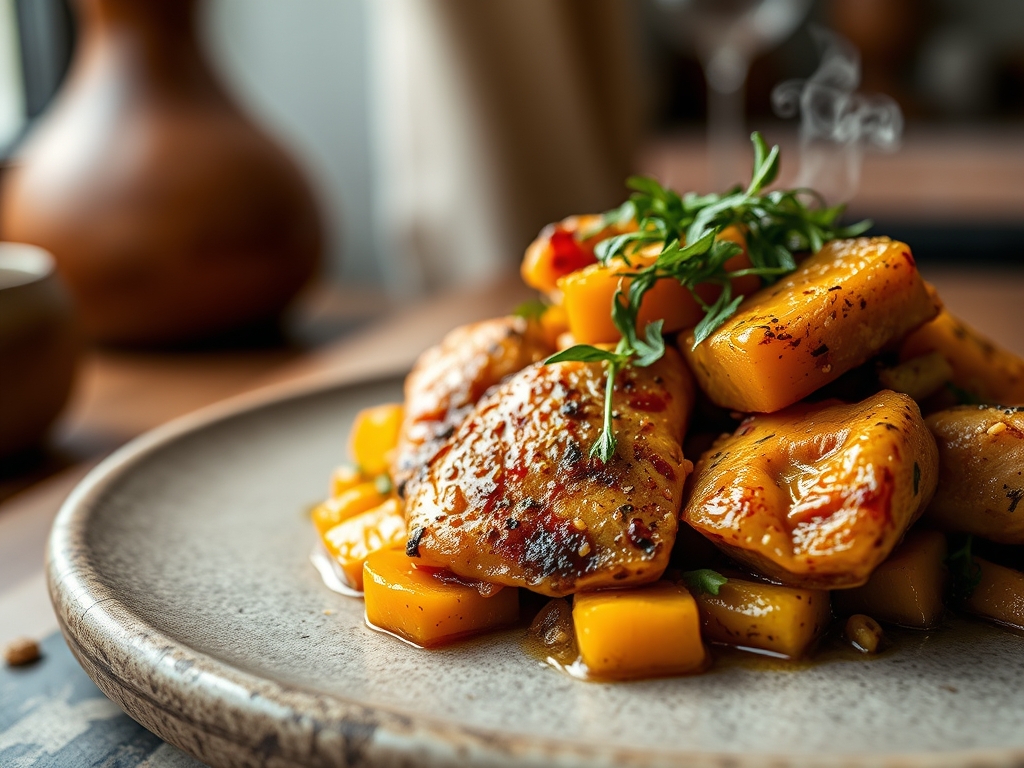
Imagine the scent of caramelized sugars dancing through your kitchen as a heavy-bottomed skillet meets the golden flesh of a winter gourd. There is a specific, primal joy in mastering butternut squash and chicken recipes that balance the savory depth of poultry with the velvet sweetness of autumn. It is the ultimate culinary alchemy; the kind that turns a Tuesday night into a gourmet event.
The secret to these dishes lies in the contrast of textures. You want chicken thighs that offer a crisp, lacquered skin and squash that holds its shape while melting like butter on the tongue. When you learn to harness the natural sugars in the squash to complement the savory proteins of the chicken, you unlock a flavor profile that is both sophisticated and deeply comforting. This is not just about dinner; it is about understanding how heat transforms raw ingredients into a cohesive, high-density masterpiece of nutrition and flavor. We are diving deep into the chemistry of the pan to ensure every bite is a revelation.
The Gathers:
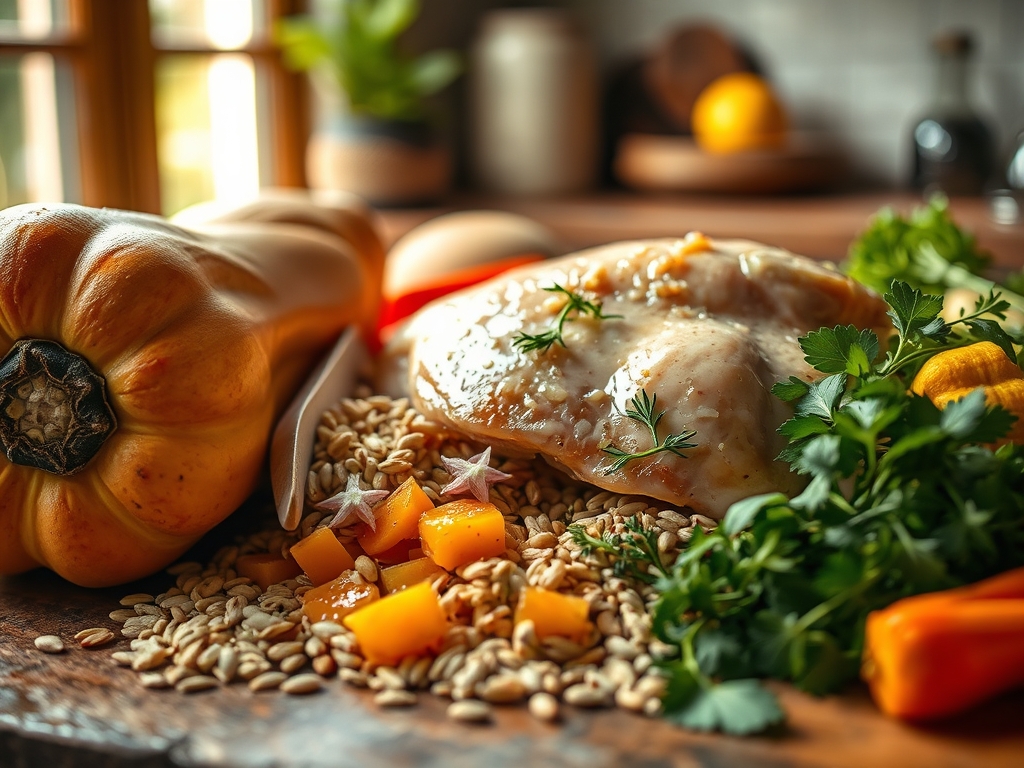
To execute these butternut squash and chicken recipes with precision, your mise-en-place must be impeccable. Start with two pounds of organic chicken thighs; the higher fat content in the dark meat ensures the protein remains succulent during the long roasting times required for the squash. For the squash itself, look for a specimen that feels heavy for its size, indicating high water content and dense sugars. You will also need a high-smoke-point fat like avocado oil or clarified butter to facilitate the Maillard reaction without scorching.
The aromatic base requires a bulb of garlic, fresh rosemary sprigs, and a piquant red onion. To balance the sweetness, we utilize an acid; either a splash of apple cider vinegar or a dry white wine for deglazing. Essential tools for this stage include a sharp chef's knife for uniform dicing and a digital scale to ensure your ratios are perfect.
Smart Substitutions:
If you are looking to pivot, swap the chicken thighs for skin-on chicken breasts, but reduce the roasting time by ten minutes to prevent desiccation. For a lower-glycemic option, substitute half of the butternut squash with cauliflower florets. If you lack fresh rosemary, a teaspoon of dried sage offers a similar earthy profile that pairs beautifully with the squash's natural musk.
The Clock
Efficiency in the kitchen is all about "Chef's Flow." Total active preparation time for these recipes is approximately 20 minutes, while the oven does the heavy lifting for another 35 to 40 minutes. The goal is to synchronize the rendering of the chicken fat with the softening of the squash cellulose.
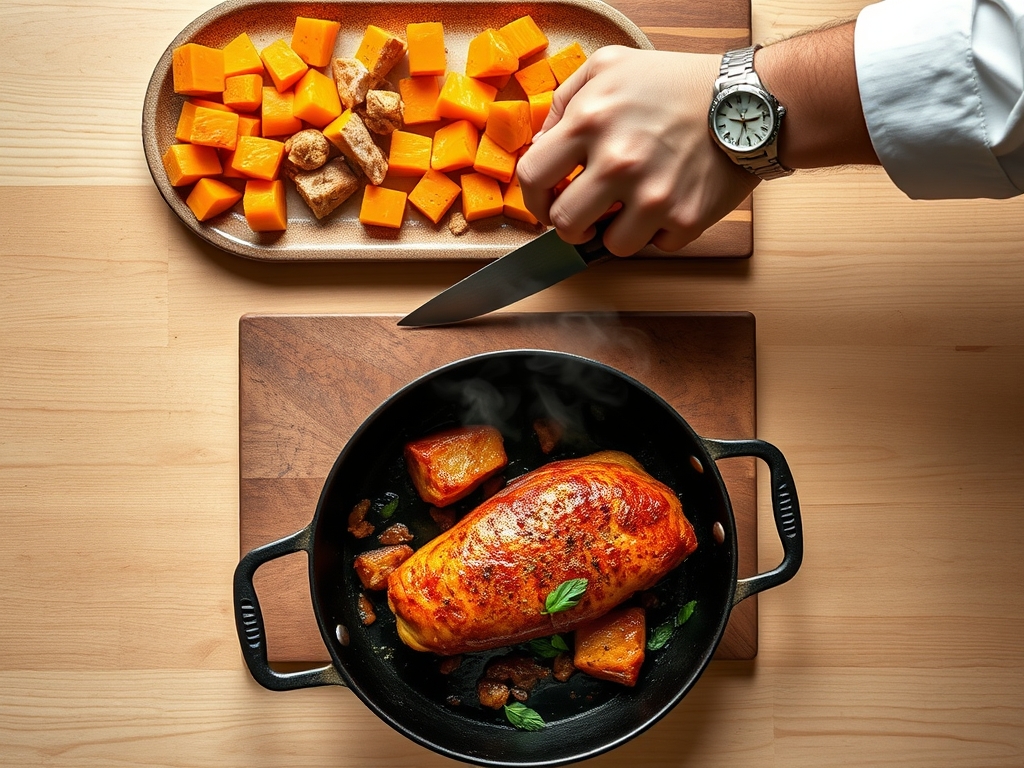
Begin by preheating your oven to 425 degrees Fahrenheit. While the air inside the oven reaches a state of high kinetic energy, you should be dicing your squash into uniform one-inch cubes. This uniformity is not just for aesthetics; it ensures that every piece reaches the same internal temperature simultaneously. Use the "bridge and claw" grip to maintain safety while tackling the tough skin of the gourd. By the time your oven chime rings, your sheet pan should be loaded and ready for the first stage of thermal transfer.
The Masterclass
1. The Sear and Render
Place your chicken thighs skin-side down in a cold, heavy-bottomed skillet before turning the heat to medium-high. This allows the subcutaneous fat to render slowly, creating a naturally non-stick surface and a shatteringly crisp skin.
Pro Tip: This technique utilizes the science of fat rendering. By starting with a cold pan, you prevent the proteins from seizing and trapping moisture, which would lead to rubbery skin instead of a golden, crispy texture.
2. The Deglaze and Infuse
Once the chicken is browned, remove it and add your cubed squash and aromatics to the hot fat. Use a wooden spoon to scrape the brown bits, known as fond, from the bottom of the pan. Add a splash of liquid to deglaze the surface.
Pro Tip: Deglazing is a chemical process where the liquid dissolves the caramelized proteins stuck to the pan. This creates a viscous sauce that infuses the squash with the concentrated essence of the chicken.
3. The Thermal Roast
Transfer the mixture to a preheated sheet pan, ensuring the ingredients are in a single layer. Roast at high heat until the squash is fork-tender and the chicken reaches an internal temperature of 165 degrees Fahrenheit.
Pro Tip: High-heat roasting triggers the Maillard reaction on the squash's surface. This is a chemical reaction between amino acids and reducing sugars that creates hundreds of different flavor compounds, giving the squash its toasted, nutty aroma.
4. The Rest and Emulsify
Remove the pan from the oven and let the chicken rest for five minutes. During this time, the juices will redistribute throughout the muscle fibers. Finish the dish with a squeeze of fresh lemon or a dusting of zest using a microplane.
Pro Tip: Resting the meat accounts for thermal carryover. The internal temperature will continue to rise by nearly five degrees after removal from the heat, ensuring the chicken is safe to eat without becoming overcooked and dry.
The Deep Dive
From a macro-nutritional perspective, butternut squash and chicken recipes are a powerhouse. A single serving provides roughly 35 grams of protein and a massive dose of Vitamin A and C from the squash. The complex carbohydrates in the gourd provide sustained energy without the insulin spikes associated with refined grains.
Dietary Swaps:
For a Keto-friendly version, reduce the squash portion and increase the chicken and added fats like olive oil. For a Vegan twist, replace the chicken with thick slabs of king oyster mushrooms, which mimic the umami and texture of poultry when seared correctly. This dish is naturally gluten-free, provided you do not use flour-based thickeners for the pan sauce.
The Fix-It:
- Soggy Squash: This happens when the pan is overcrowded. The steam cannot escape, so the squash boils instead of roasts. Fix: Use two sheet pans to ensure airflow.
- Dry Chicken: Usually caused by overcooking. Fix: Use a digital meat thermometer to pull the chicken at exactly 160 degrees, allowing carryover heat to finish the job.
- Bland Flavor: This indicates a lack of acid. Fix: Add a splash of lemon juice or balsamic glaze right before serving to brighten the heavy fats.
Meal Prep:
When reheating, avoid the microwave, which can turn the squash into mush. Instead, use a toaster oven or a skillet with a teaspoon of water and a lid. This creates a small steam chamber that rehydrates the chicken while maintaining the integrity of the squash.
The Wrap-Up
Mastering butternut squash and chicken recipes is a rite of passage for any home cook looking to elevate their seasonal repertoire. By focusing on the science of the sear and the chemistry of the roast, you transform humble ingredients into a dish that is far greater than the sum of its parts. Go forth, grab your heavy-bottomed skillet, and let the aroma of roasting squash fill your home. Your kitchen is now a laboratory of flavor; enjoy the results of your delicious experiments!
The Kitchen Table
Can I use frozen butternut squash for these recipes?
Yes, but increase the oven temperature by 25 degrees. Frozen squash contains more surface moisture, so a higher heat is necessary to evaporate the water quickly and trigger the Maillard reaction for browning rather than steaming.
What is the best way to peel a butternut squash?
Use a heavy-duty Y-peeler rather than a standard swivel peeler. Slice a small piece off the top and bottom to create stability, then peel in long, downward strokes. This ensures safety and uniform skin removal.
Can I use chicken breasts instead of thighs?
Absolutely. However, chicken breasts are leaner and cook faster. To prevent them from drying out, add them to the roasting pan ten minutes after the squash has already begun cooking to ensure both components finish simultaneously.
How do I know if the squash is perfectly cooked?
The squash should be easily pierced with a fork but still hold its cuboid shape. If it collapses into a puree, it is overcooked; if it offers resistance in the center, it requires another five minutes of roasting.